By Mohammed Rashad Hussain, Managing PartnerPublished 7 min read
What is a corporate chauffeur account?
A corporate chauffeur account is a standing agreement between your company and one operator. It fixes four things in advance: the car classes, the rate basis for each kind of trip, who may book, and how the month is invoiced.
After that, nobody pays at the kerb. A director landing at DXB Terminal 3 walks out to a chauffeur holding a name board, and no one files an expense claim. The trip appears on the next monthly invoice with the cost centre the booker gave.
Take a regional office in Business Bay. It might have three visiting directors a month, a weekly meeting in Abu Dhabi and new joiners arriving most weeks. Downtown Dubai to central Abu Dhabi alone is about 139 km, roughly 1 hour 30 minutes without traffic. Paying for that by card, trip by trip, leaves finance matching receipts all month. An account turns it into one statement.
Our corporate ground transport guide covers the wider picture: staff buses, events and licensing. This page covers the account itself.
What do you need to open one?
The operator needs enough to bill the right company and to know who may book. Prepare these before you ask for a proposal.
- A copy of your trade licence. The legal name on it should match the name on every invoice.
- Your Tax Registration Number, if your company is VAT registered, for the billing details.
- The billing contact. One name, email and phone for invoices and statement queries.
- The list of authorised bookers. Each person’s name, role and mobile number, so WhatsApp bookings can be matched to a name.
- Your car policy. Which car class each grade of traveller gets, and who approves upgrades.
- Purchase order rules. Whether every trip needs a PO number, or only trips above a set length.
- Your vendor registration form, if procurement uses one.
Send these with your request on the corporate accounts page. Assure replies with a written proposal covering car classes, rate bases, the invoice format and the credit terms.
How do bookings work day to day?
Each booking is one message. The more complete it is, the fewer calls follow.
| Field | Example |
|---|---|
| Traveller | Name and mobile number, with country code |
| Flight or pickup | The flight number of an Emirates arrival at DXB Terminal 3, or the office address in DIFC |
| Pickup time | For flights, the scheduled landing time |
| Drop-off | Hotel name, or a second stop such as ADGM on Al Maryah Island |
| Passengers and bags | 2 passengers, 3 large suitcases |
| Car class | As set by your car policy |
| Billing | Cost centre or PO number |
Bookers send this on WhatsApp or by phone, and Assure answers both 24/7. Our guide to booking a chauffeur on WhatsApp shows the full message flow, from the first request to the chauffeur’s details.
For airport trips, the flight number does the work. The chauffeur follows the real landing time and waits in the arrivals hall with the traveller’s name on a board. Our meet and greet explainer walks a first-time visitor through it, and the airport transfers page covers every UAE airport.
Keep every change in the same WhatsApp thread as the booking. A new flight number, an extra passenger or a later pickup then sits next to the original request, and the chauffeur sees it too.
What appears on the monthly invoice?
A monthly invoice has two layers: the legal tax invoice, and the trip statement behind it.
The tax invoice must meet Federal Tax Authority rules. It shows the words “Tax Invoice”, the supplier’s Tax Registration Number (TRN) and the VAT charged. The UAE standard rate is 5 per cent, in force since 1 January 2018. A business without a TRN may not charge VAT at all, so check the number with the FTA’s TRN verification tool before the first payment.
The trip statement should list these details for every trip.
- the date and the pickup time
- the traveller and the booker
- the route driven, or the hours booked on hourly hire
- waiting time beyond what the agreement includes
- tolls and parking, where the agreement passes them on
- the cost centre or purchase order number
Tolls deserve their own line. Dubai’s Salik gates and Abu Dhabi’s Darb gates charge per crossing. Since 4 May 2026, the Darb gate at Ghantoot on Sheikh Maktoum bin Rashid Street charges every crossing, 24 hours a day, so a Dubai to Abu Dhabi trip on that road passes it. Our Salik tolls guide explains the Dubai side. Agree whether tolls are passed on at cost or built into the trip price.
VAT treatment needs a line-by-line answer. Under FTA guidance, a domestic passenger trip is exempt and an international one, such as a run to Oman or another GCC state, is zero-rated. Which trips qualify depends on the vehicle and the journey. Ask the operator to state the treatment for each trip type, and have your tax adviser confirm it.
Credit terms, deposits and payment methods
Credit terms are agreed per account. Assure sets them in the written proposal and does not publish them, because they depend on volume and on your payment cycle.
Put three things in your request so the proposal can answer them:
- Your payment cycle, for example 30 days from the invoice date, or a fixed payment run each month.
- Your expected monthly volume, even as a range.
- Any large one-off event, such as a show week with 20 cars a day. The operator may ask for a deposit on a booking that size, and it is better to agree that early.
The proposal also states the accepted payment methods and the bank details. Check those details against the vendor’s letterhead before the first payment.
How do you control spend?
An account makes spend easy, which is why it needs controls.
- Named bookers only. Ask the operator to check bookings from unlisted numbers with your account contact first.
- Car class caps. Tie each traveller grade to a car class, so a booker cannot send an S-Class where your policy says a Lexus ES 300h.
- Upgrade approval. Name the person who can approve an upgrade, and accept the approval in the WhatsApp thread so it is on record.
- Monthly reports. Ask for trips by booker, by cost centre and by car class. Outliers show up in minutes.
- Hourly creep. If one executive books a car by the hour most days, a monthly driver on the same account may cost less.

What happens with changes, cancellations and no-shows?
Every operator has its own policy, so get these points in writing before the first booking.
- Change and cancellation cut-off. How late a booking can be changed or cancelled without charge, for transfers and for hourly hire.
- Airport waiting. How long the chauffeur waits after the real landing time before the trip counts as a no-show.
- Diversions. What happens when a flight bound for DXB lands at Al Maktoum International (DWC) or Sharjah instead.
- Overruns. The rate for extra hours when a meeting runs late, and whether the booker must approve them.
- Disputes. Who checks a disputed line, and how long the operator has to answer.
Assure confirms its waiting time and cancellation terms in each proposal.
Running a trial before you sign
A month of real trips tells you more than any brochure. Ask for a trial with 20 to 30 trips across the work you actually do: airport pickups, a day of hourly hire and one Abu Dhabi run.
Track five things during the month.
- How fast each booking was confirmed.
- Whether every pickup was on time, using the traveller’s own report.
- How a late-night change was handled.
- Whether the invoice matched the bookings line for line.
- How the account contact answered a complaint.
Sign the full agreement only after the first invoice reconciles. Our corporate transport RFQ checklist helps if you are comparing more than one vendor during the trial.
Account setup checklist
- Trade licence copy sent, legal name checked
- TRN and billing contact sent
- Authorised bookers listed with mobile numbers
- Car policy by grade agreed, with the upgrade approver named
- Rate basis agreed for transfers, hourly hire, full days and night trips
- Toll and parking treatment agreed
- VAT treatment per trip type confirmed in writing
- Change, cancellation, waiting and no-show terms agreed
- Credit terms and payment method agreed
- Invoice format, PO and cost centre rules agreed
- Monthly report format agreed
- Trial month booked, with a review date
Photos in this guide

Office towers of Business Bay along the Dubai Water Canal at sunsetIwona Rege / Wikimedia Commons, CC BY-SA 4.0

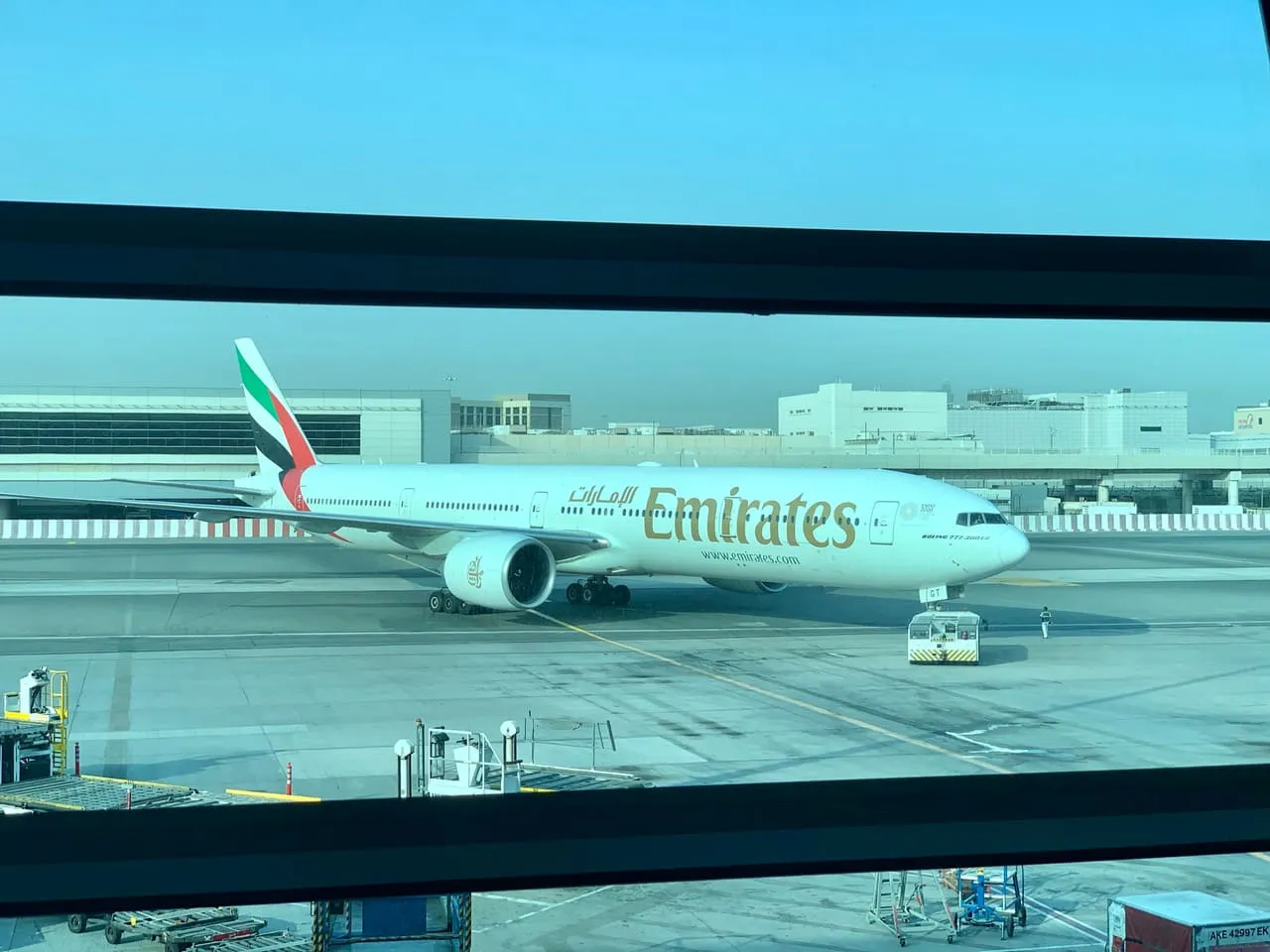
An Emirates Boeing 777 on the apron, seen through the window of Terminal 3 at Dubai International AirportKgbo / Wikimedia Commons, CC BY-SA 4.0

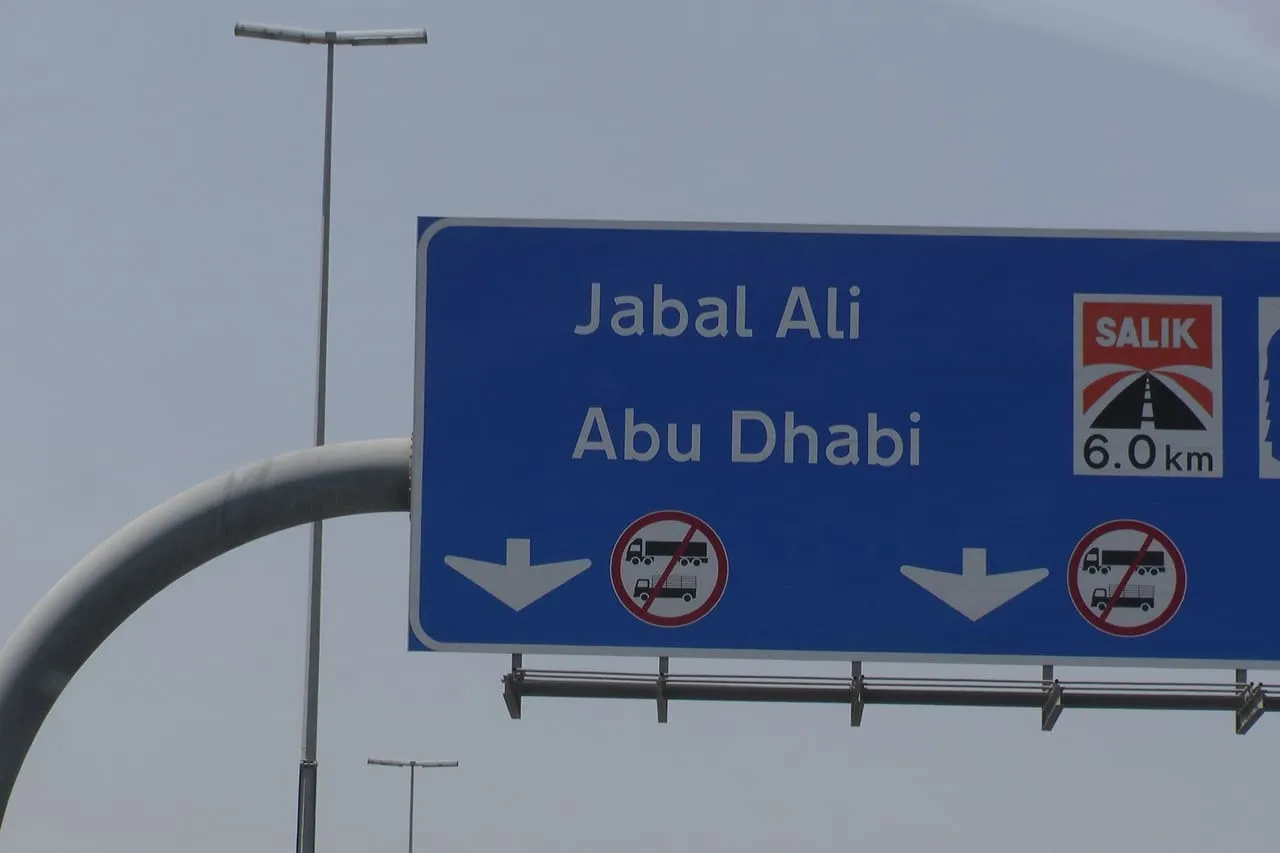
Overhead road sign in Dubai for Jebel Ali and Abu Dhabi, marking a Salik toll gate 6 km aheadSteven Lek / Wikimedia Commons, CC BY-SA 4.0

A grey Lexus ES 300h hybrid sedan parked at the kerbDinkun Chen / Wikimedia Commons, CC BY-SA 4.0