By Mohammed Rashad Hussain, Managing PartnerPublished 3 min read
Why this page uses 2026 figures
Ramadan 2027 is projected to start around 8 February, and the Dubai authorities publish the changed hours only shortly before. The schedule below is what applied in 2026. The pattern repeats most years, but treat the exact times as a guide and check rta.ae and salik.ae in early February.
Sources reported different evening parking times in 2026, and this page says where they differ.
What are the Dubai Metro and tram timings in Ramadan?
| Service | Days | 2026 hours |
|---|---|---|
| Metro (Red and Green lines) | Monday to Thursday, Saturday | 5 am to midnight |
| Metro | Friday | 5 am to 1 am |
| Metro | Sunday | 8 am to midnight |
| Dubai Tram | Monday to Saturday | 6 am to 1 am |
| Dubai Tram | Sunday | 9 am to 1 am |
Buses use the S’hail app, and marine transport has its own page on the RTA site. Our Dubai Metro guide covers the stations.
What are the paid parking hours in Ramadan?
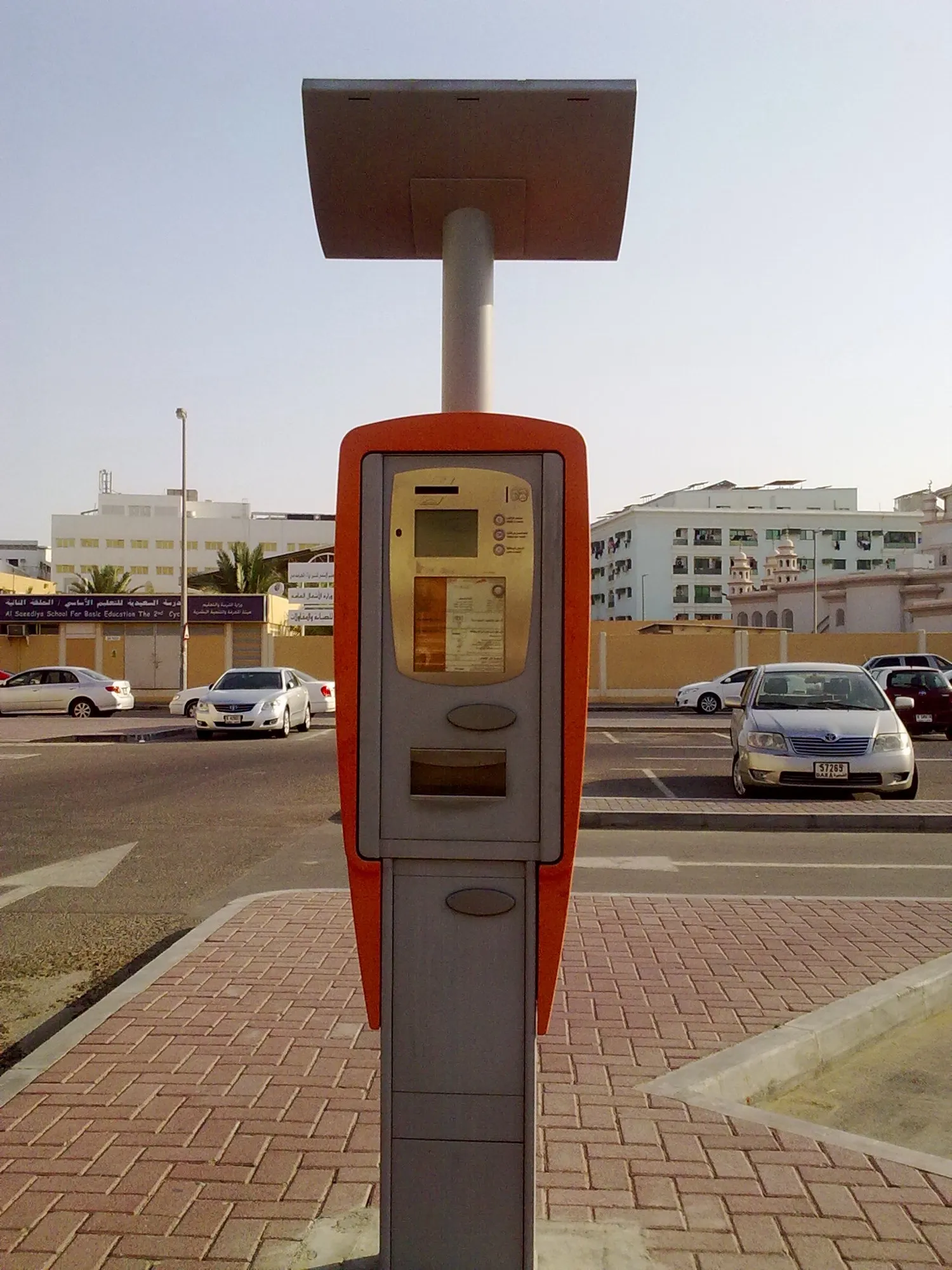
In 2026, Dubai paid parking was split into two blocks Monday to Saturday:
- 8 am to 6 pm
- Free from 6 pm to 8 pm, around iftar
- A second block from 8 pm, ending at 10 pm per Gulf News, or midnight per What’s On Dubai
Sunday parking was free, and multi-storey car parks ran 24/7. Parkonic zones can differ. Our Dubai parking guide explains zones and payment. Always read the sign on your street, because it overrides any article.
How do Salik rates change in Ramadan?
Gulf News reported a time-based Salik schedule in 2026:
| Window | Monday to Saturday | Sunday |
|---|---|---|
| 2 am to 7 am | Free | Free |
| 7 am to 9 am | Lower rate | Lower rate |
| 9 am to 5 pm | Peak | Lower rate |
| 5 pm to 2 am | Lower rate | Lower rate |
Our Salik tolls guide explains the gates and how charges work. Confirm the 2027 windows on salik.ae.
Mall and attraction hours
Malls open later and close late. Gulf News listed these 2026 hours, based on 2025 schedules:
- City Centre Deira and City Centre Mirdif: 10 am to 1 am, restaurants until 2 am
- The Beach at JBR: 10 am to 1 am
- Dubai Festival City Mall and City Walk: until midnight, restaurants until 1 am
- Global Village: 5 pm to 1 am Sunday to Wednesday, 5 pm to 2 am Thursday to Saturday
Cinemas open around 1 pm or 2 pm and run late shows after iftar. Confirm each venue, and see our Global Village timings guide for its season.
Government and private-sector working hours
The UAE government portal states that private-sector hours drop by 2 hours a day in Ramadan. In 2026 the federal government worked 9 am to 2:30 pm Monday to Thursday and 9 am to 12 noon on Friday. KHDA capped the school day at 5 hours.
For meetings, aim for late morning.
Sharjah and Abu Dhabi at a glance
Abu Dhabi in 2026: paid parking 9 am to 6 pm and 9 pm to 2 am, Monday to Saturday, free on Sundays. Darb tolls applied only at 8 to 10 am and 2 to 6 pm, Monday to Saturday. Sharjah’s Ramadan parking hours are not confirmed here. Check with Sharjah Municipality.
When is traffic worst in Ramadan?
The hour before sunset is the pinch point. Offices close early, and people drive to iftar at the same moment. After iftar, roads around Dubai Mall, City Walk, JBR and Global Village slow again. Mornings are lighter than normal.
Planning meetings, site visits and airport runs
Put meetings in the late morning and fix a hard finish by 2 pm. Book an airport run so you reach your hotel before sunset or after the first hour of iftar. A car with driver removes parking and Metro crowding from the day, and a chauffeur by the hour suits site visits across several emirates. Tell the driver your iftar plans when you book on WhatsApp.
For what visitors can and cannot do by day, read our Ramadan guide for visitors.
Photos in this guide

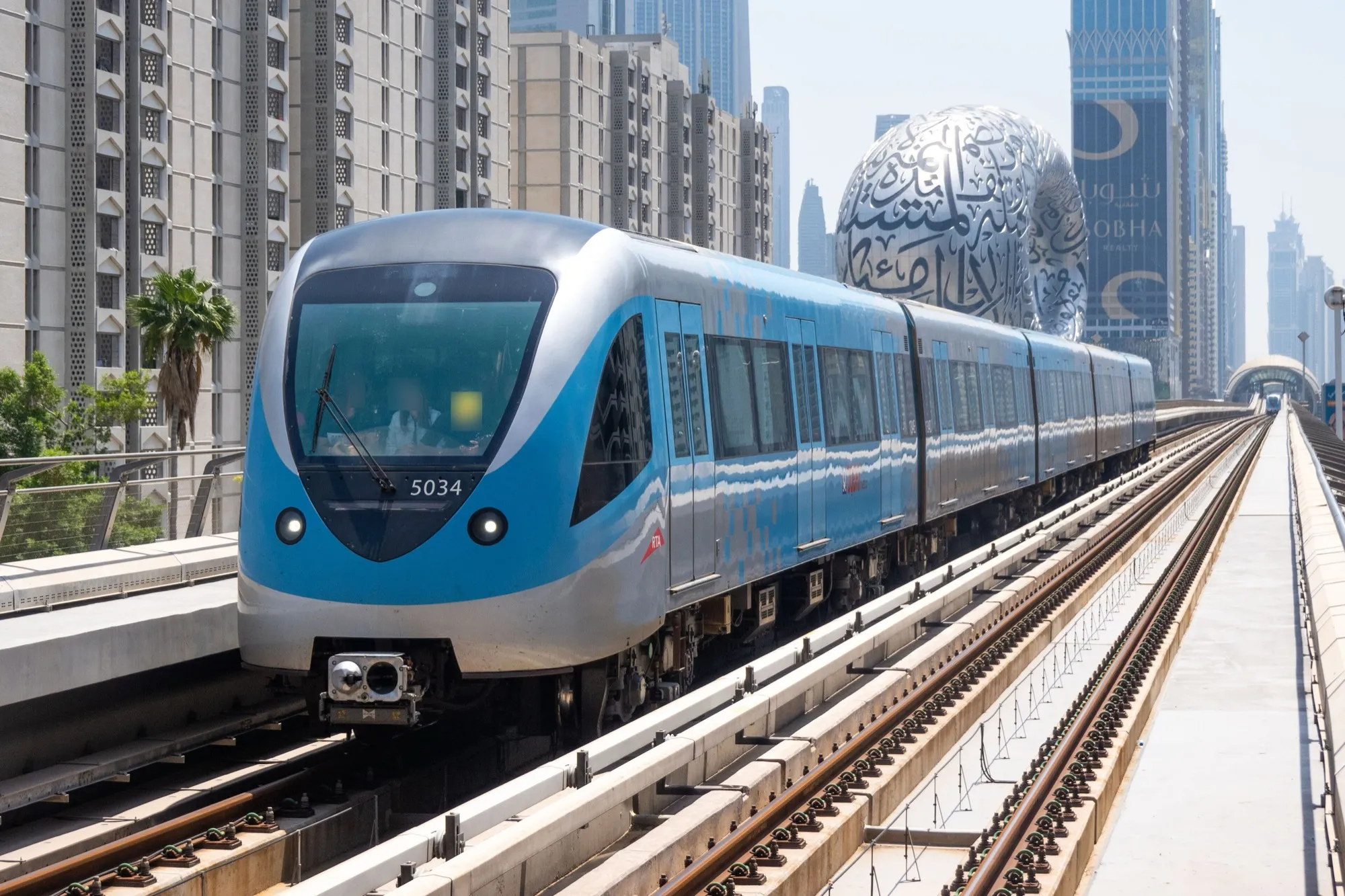
A blue and silver Dubai Metro Red Line train on the raised track near World Trade Centre StationTim Wu / Wikimedia Commons, CC BY-SA 4.0
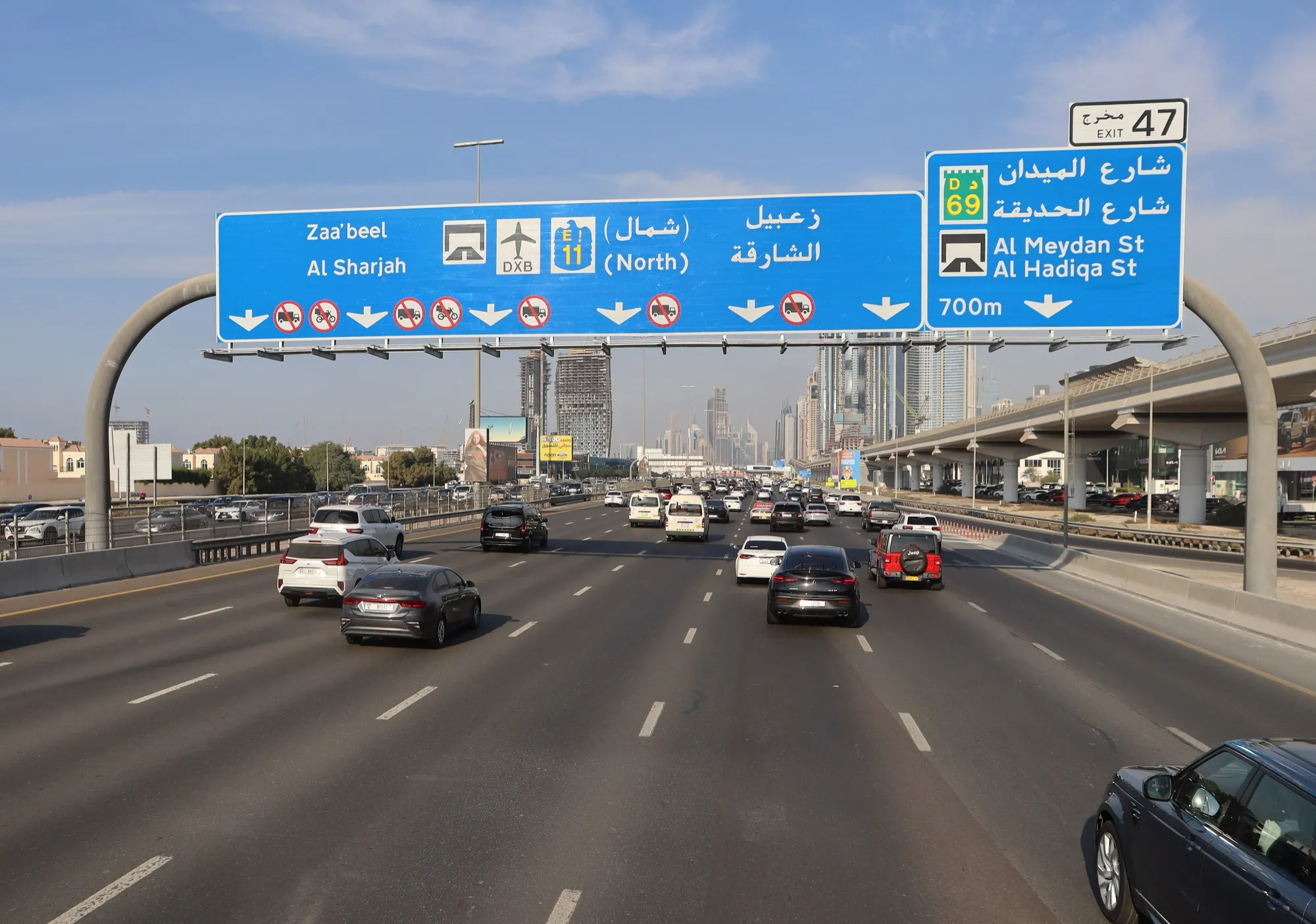
Traffic on Sheikh Zayed Road (E11) under an overhead sign for DXB and Sharjah, with the Metro viaduct alongsideCoolcaesar / Wikimedia Commons, CC BY 4.0

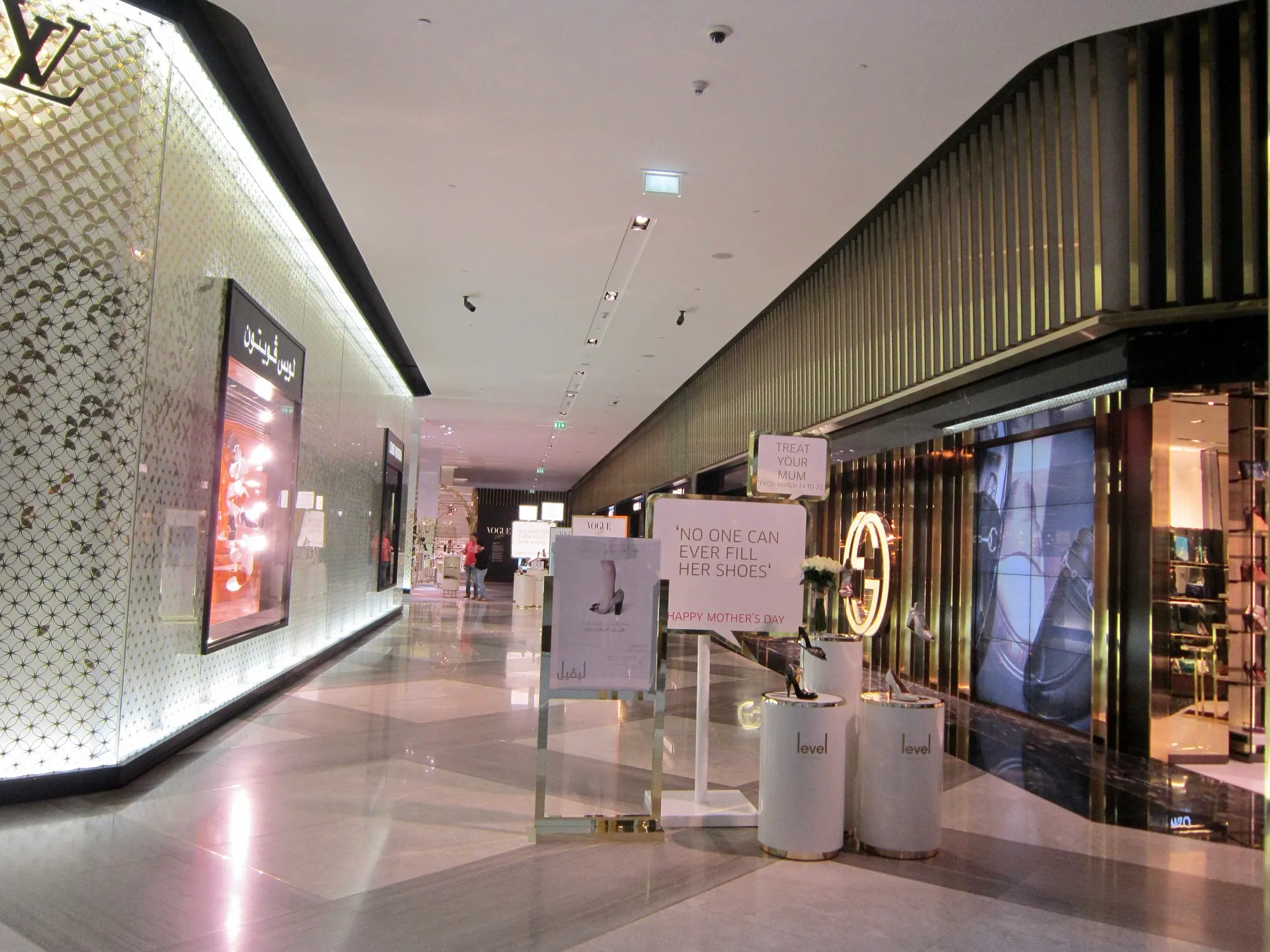
A quiet luxury shopping corridor inside The Dubai MallAnk Kumar / Wikimedia Commons, CC BY-SA 4.0