By Mohammed Rashad Hussain, Managing PartnerPublished 5 min read
Step 1: find your peak-hour headcount
You do not size transport for the whole guest list. You size it for the busiest hour. For a conference that is the hour before the first session. For a gala it is the 60 to 90 minutes before the doors close.
Write down three numbers:
- People who need a ride in the peak window.
- The length of that window in minutes.
- The one-way drive time from the pickup point to the door.
Everything else follows from those three.
Step 2: use real seat counts, from a sedan to a 50-seat coach
Use the usable seats, not the brochure number. We plan at about 85 per cent of listed seats, because a few seats go to hosts, bags or people who change plans.
| Vehicle | Listed seats | Planning load (85%) | Luggage (large cases) |
|---|---|---|---|
| Business sedan, such as Lexus ES 300h | 3 | 3 | 2 to 3 |
| Mercedes-Benz V-Class | 6 | 5 | 4 |
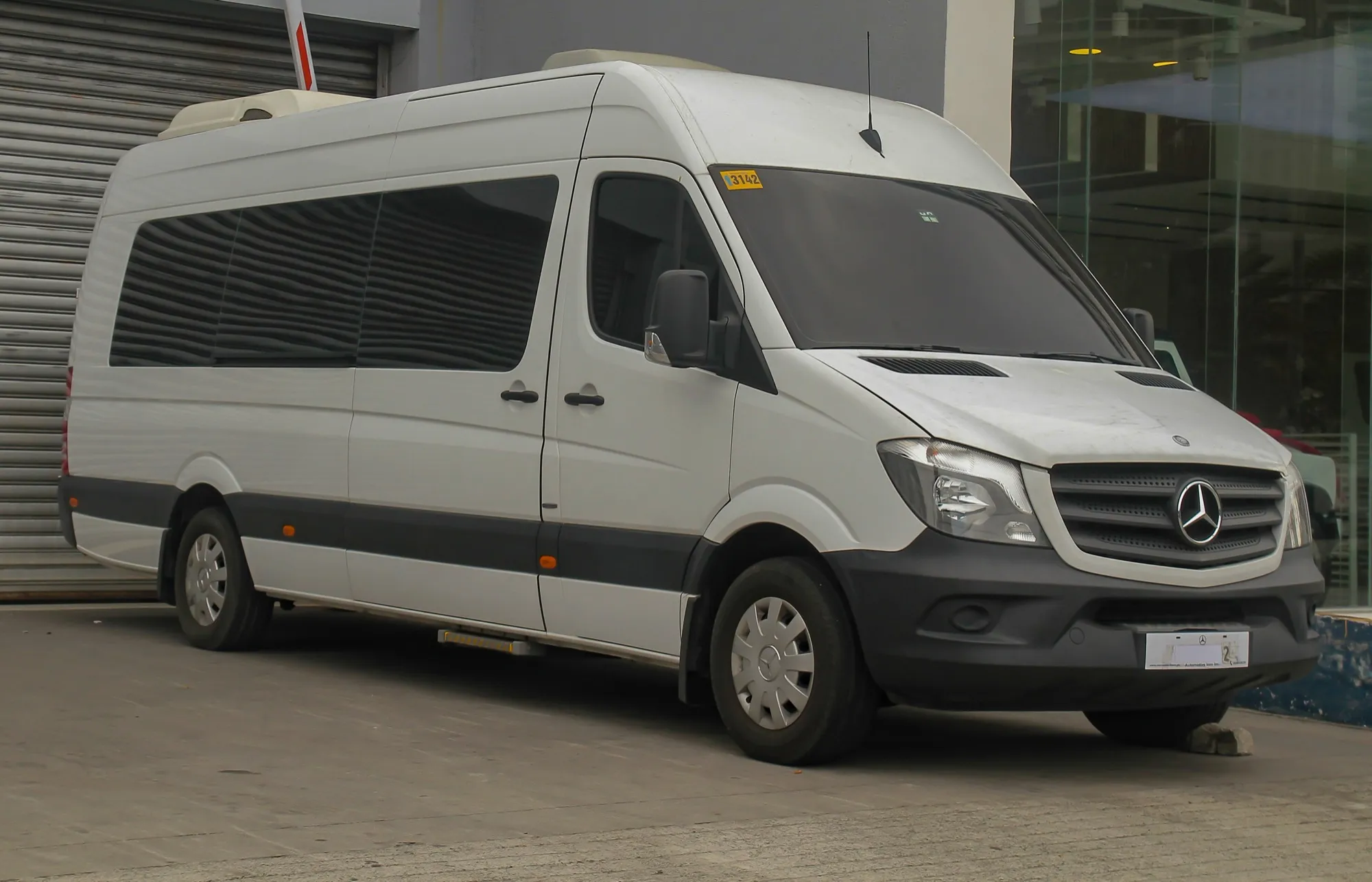
| Mercedes-Benz Sprinter, 13 seats | 13 | 11 | 6 |
| Mercedes-Benz Sprinter, 19 seats | 19 | 16 | 3 |
| Toyota HiAce Commuter (partner) | 12 | 10 | 3 |
| Toyota Coaster (partner) | 22 | 19 | none in a separate hold |
| 35-seat coach (partner) | 35 | 30 | 15 |
| 50-seat coach (partner) | 50 | 42 | 35 |
Extra vehicles come from our partners when they have them free. See the full Assure fleet for each model. Our minibus rental page covers the 13 to 22 seat range, and bus rental covers 35 and 50 seat coaches.
Step 3: allow for luggage on airport runs
Luggage changes the answer on airport runs. A 19-seat Sprinter has about 3 large-suitcase spaces, so it is a 19-seat van only when nobody has a bag.
The rule: count one large case per arriving guest. If the case count exceeds the luggage figure in the table, the case count sets the vehicle, not the seat count. A 50-seat coach with an underfloor hold takes about 35 cases, so it fits 35 guests with bags, not 50.
For a city site visit or a hotel-to-venue shuttle, guests carry laptops or a handbag. Seat count alone is then enough. See what size of bus suits group transport in the UAE for more on the choice of body.
Step 4: work out round-trip time and loops per hour
A loop is one trip to the venue and back to the pickup point. Add loading and unloading.
Round-trip time = drive there + drive back + 10 to 15 minutes of loading.
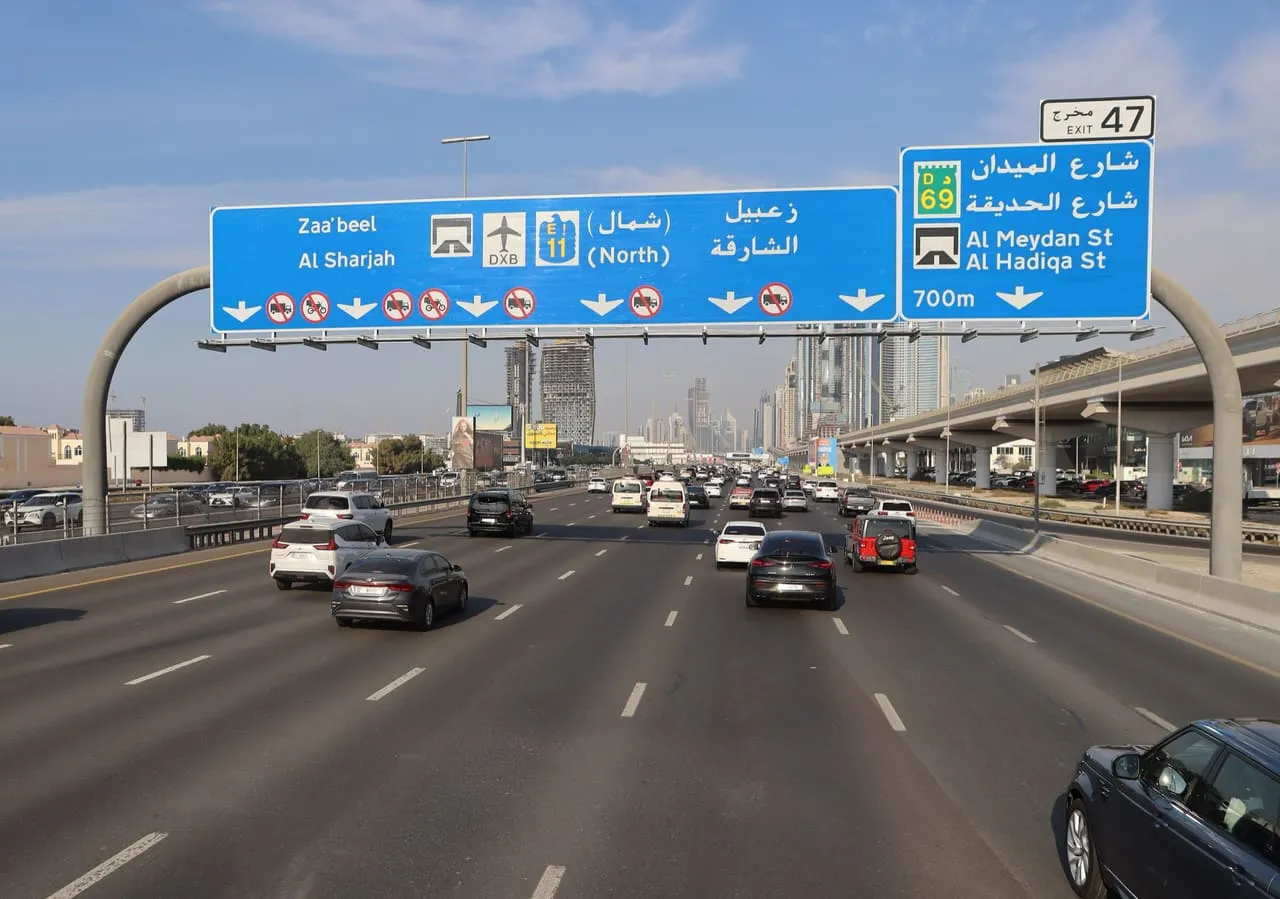
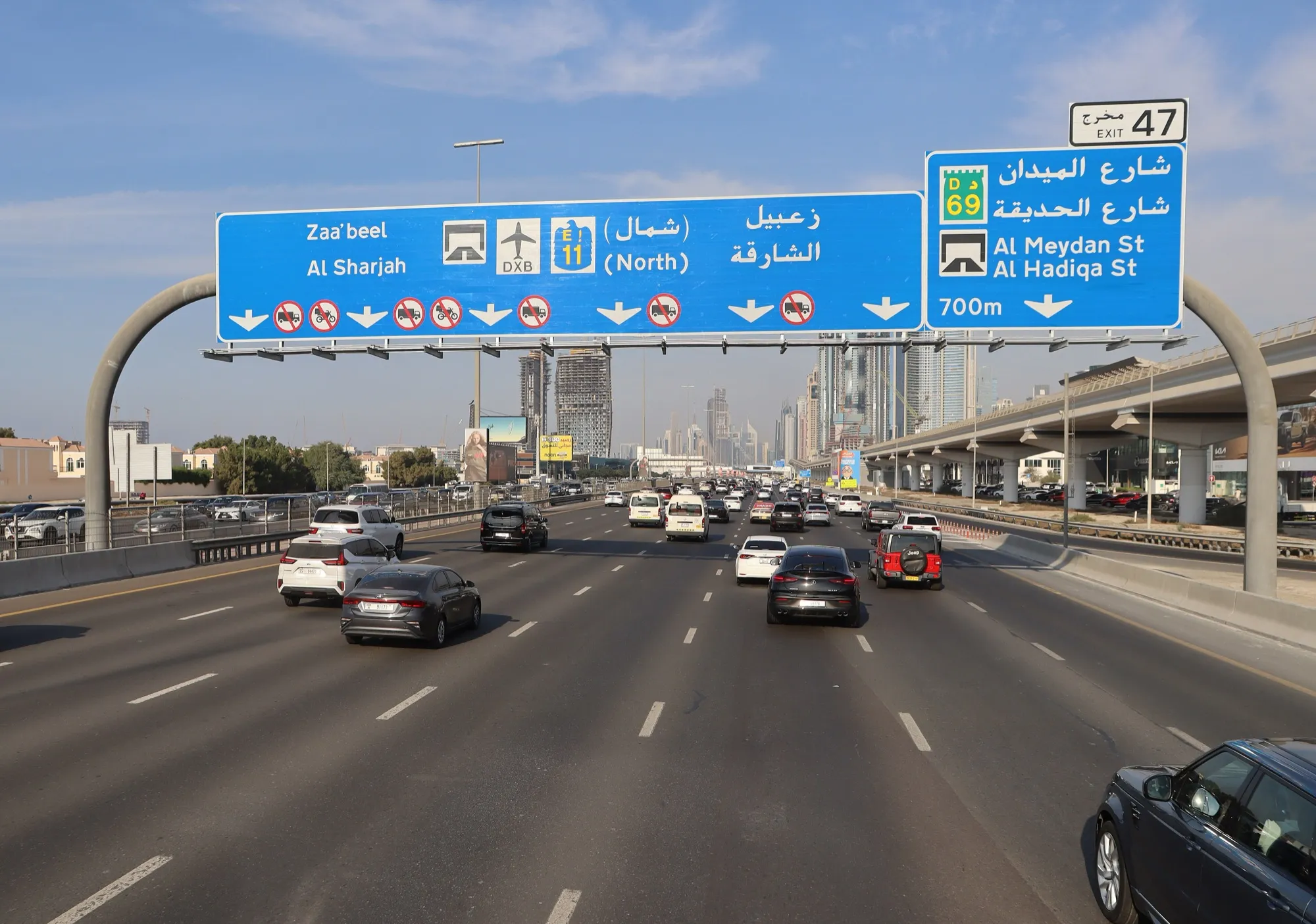
Example: a hotel in Dubai Marina to Dubai World Trade Centre is a long cross-town run along Sheikh Zayed Road. Allow 30 to 40 minutes each way in normal traffic, which gives a round trip of 70 to 95 minutes. A hotel in Downtown, 5 to 10 minutes from DWTC, gives a round trip near 30 minutes.
Loops per hour = 60 divided by round-trip minutes, rounded down. A 30-minute round trip gives 2 loops. An 80-minute round trip gives less than 1, so a vehicle serves only one wave.
Departure gap = round-trip time divided by vehicles on the loop. Four coaches on a 40-minute loop leave every 10 minutes.
Step 5: add reserve vehicles
Add one reserve for every ten you run, and never fewer than one on a loop with more than three vehicles. The reserve covers a breakdown, a late arrival or a guest list that grows. For a one-off gala, keep the reserve parked at the venue, not at the depot.
If the event runs late, tell the dispatcher the time the last guest leaves. A late finish can mean extra driver hours or a second driver. Ask the operator how they handle it before you sign.
Worked examples
A 40-person site visit
One way, no luggage, a single pickup. Use one 50-seat coach, which holds the group at 80 per cent. Or send two 22-seat Toyota Coasters, which seat 44. One coach is simpler. Two vehicles let the group split to visit two sites in the same morning.
A 300-delegate conference
Peak: 300 delegates in one hour from a single hotel cluster. Round trip: 30 minutes, so 2 loops per coach.
- Usable seats per 50-seat coach: 42.
- People per coach in the hour: 2 loops x 42 = 84.
- Coaches needed: 300 / 84 = 3.6, so 4.
- Reserve: 1.
Total: 5 coaches. For the full conference process, including airport arrivals, see our conference delegate transport plan.
A 1,000-guest gala
Guests arrive over 90 minutes. Round trip is 45 minutes, so 2 loops per coach.
- People per coach: 2 x 42 = 84.
- Coaches: 1,000 / 84 = 11.9, so 12.
- Reserves: 2.
Total: 14 coaches. Plan the return too. Most guests leave in a 30-minute burst after the last speech, so return capacity should be higher, not equal. Many events also use staggered departures. Cars for VIPs sit outside this count.
Quick reference table
| Group | Without luggage | With one case each |
|---|---|---|
| 5 people | 1 V-Class | 1 V-Class |
| 12 people | 1 Sprinter (13 seats) | 1 Sprinter (13 seats), 6 cases only |
| 16 people | 1 Sprinter (19 seats) | 2 vehicles, or 1 coach |
| 30 people | 1 coach (35 seats) | 1 coach (35 seats), 15 cases only |
| 45 people | 1 coach (50 seats) | 1 coach and 1 Sprinter for cases |
| 100 people | 3 coaches (50 seats) | 4 coaches |
Late-night returns and staggered departures
Late returns need a plan, not extra buses. Stagger by hotel or table, and post a departure board with times. Dispatch the fullest coach first and fill each one before the next leaves.
For wedding guests, see wedding guest shuttles in Dubai. For a smaller office party, read office party transport. For daily staff runs, worker transport rules in the UAE apply. If you are choosing between a van and a minibus, compare the V-Class and the Sprinter. The price side is in what sets the price by seat size. Send the numbers to our corporate team and we will check them.
Photos in this guide

A white high-roof Mercedes-Benz Sprinter minibus with passenger windows along its sideEthan Llamas / Wikimedia Commons, CC BY-SA 4.0

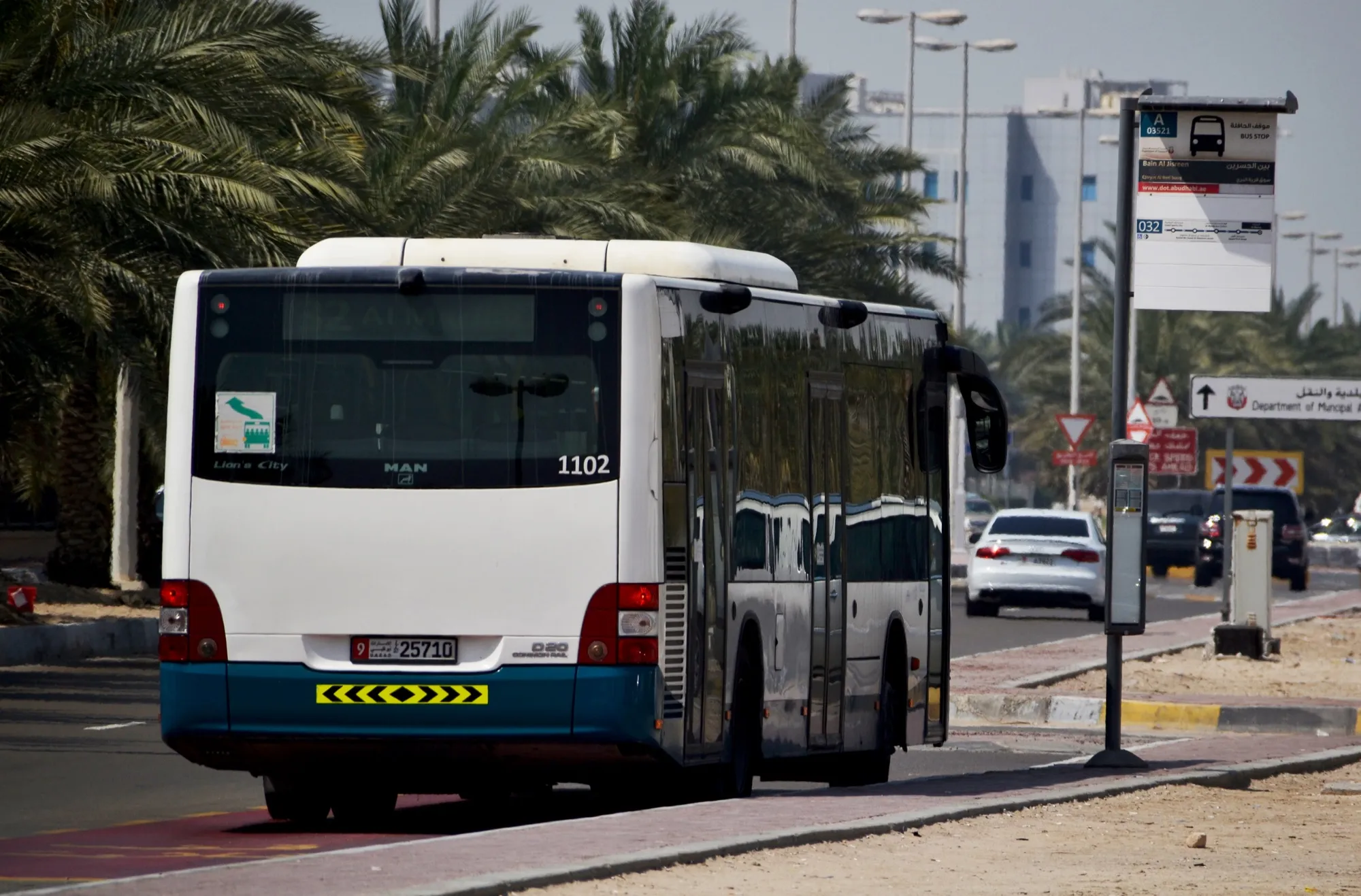
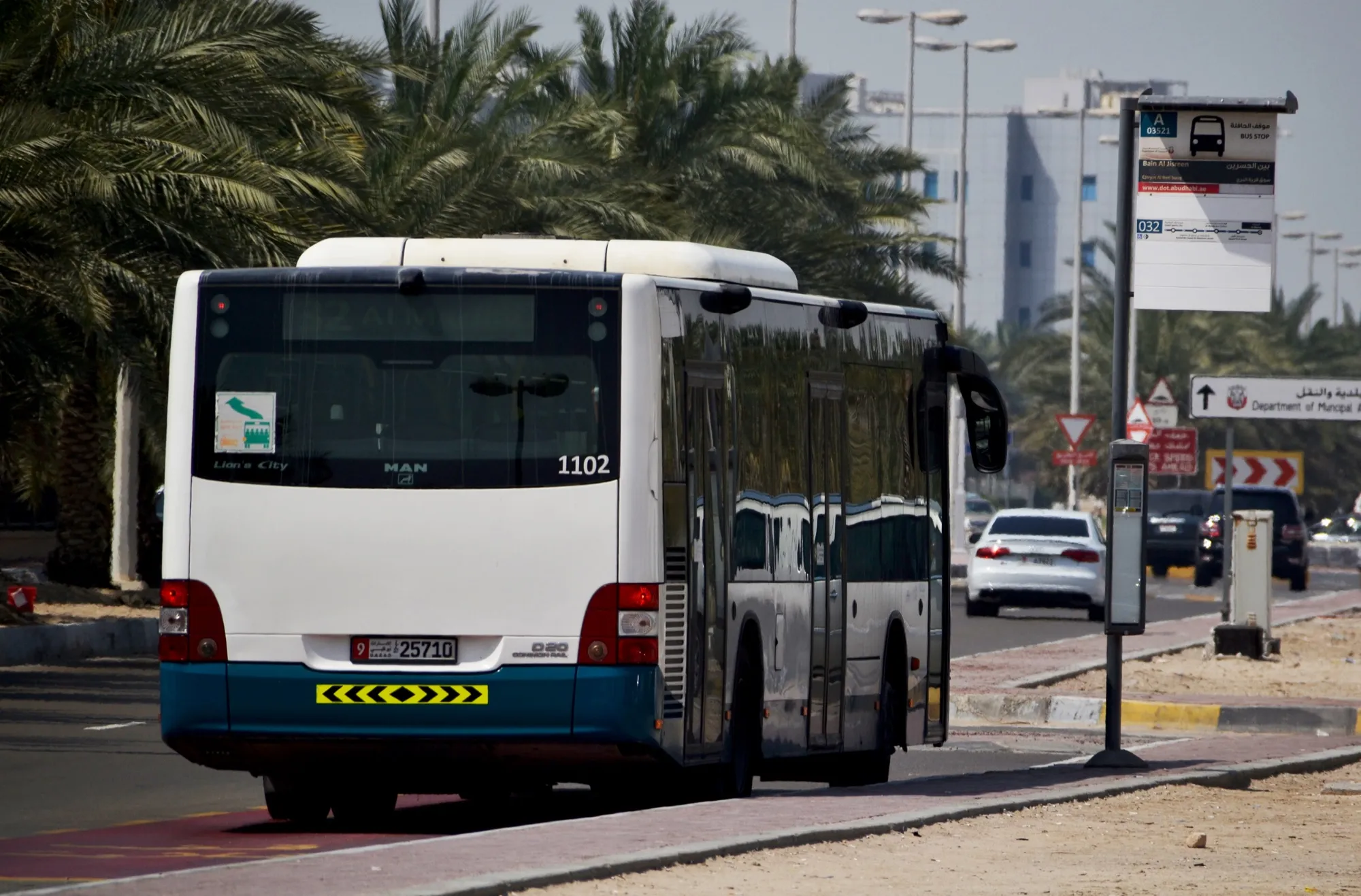
A city bus at a bus stop on a palm-lined street in Abu DhabiMosbatho / Wikimedia Commons, CC BY 4.0

Traffic on Sheikh Zayed Road in Dubai under overhead signs for Sharjah, DXB airport and Al Meydan StreetCoolcaesar / Wikimedia Commons, CC BY 4.0