By Mohammed Rashad Hussain, Managing PartnerPublished 7 min read
Do you need a visa for Musandam?
Musandam is a governorate of Oman, cut off from the rest of the country by UAE land. Its capital is Khasab, and Dibba Al-Bay’ah is one of its four provinces. A day out there from Dubai is therefore an international trip, with two border posts each way.
Oman’s Ministry of Foreign Affairs sorts visitors into four groups. Its entry visas page was last updated on 22 September 2026.
| Your passport | Rule for Oman | Examples from the ministry’s lists |
|---|---|---|
| GCC citizen | No Omani visa | Bahrain, Kuwait, Qatar, Saudi Arabia, the UAE |
| First list | 14-day visa exemption | Australia, Canada, Italy, Japan, South Africa, Turkey |
| Second list | 14-day exemption only with GCC residence, or a valid visa for the US, Canada, Australia, the UK, a Schengen country or Japan | India, Mexico, Tunisia, Azerbaijan, Algeria |
| Neither list | Apply for a visa through the Royal Oman Police before the trip | Pakistan, Sri Lanka, Nepal |
The exemption covers stays of up to 14 days and cannot be extended or turned into a residence visa. For a day trip, the 14-day limit does not bind, but the conditions in the next section still apply.
Musandam for Indian passport holders
India sits on the second list. If you live in the UAE or another GCC country, your residence qualifies you for the exemption. A valid US, Canadian, Australian, UK, Schengen or Japanese visa also qualifies. An Indian visitor on a UAE visit visa with none of those needs an Omani visa first, and a UAE visa that allows re-entry.
Is there a visa on arrival?
The ministry’s page describes the exemption, not a visa on arrival. In 2022 a Royal Oman Police spokesman told the Oman Observer that GCC residents could get an eVisa or a visa on arrival, depending on nationality. Treat the border as the last check, not the first: confirm your passport on the ROP eVisa service before you book.
The ROP eVisa help line is 80080011 inside Oman and +968 22848200 from outside. The portal did not load when we checked on 17 October 2026, so allow time for a retry.
Documents checklist
Pack these for every traveller, children included:
- Original passport, valid for at least 6 months. Oman’s exemption asks for that, and the UAE counts 6 months from the day you re-enter.
- Your UAE status: a multiple-entry visit visa, or a residence visa with your Emirates ID.
- Any Omani visa your nationality needs, printed or saved on your phone.
- Trip details for the exemption: Oman lists a return ticket, a confirmed hotel booking, health insurance and enough funds. Its page does not say how a land post applies these to a day visitor, so carry your dhow booking and travel insurance details.
The car needs its own papers to cross the border too. We check those for your date before we confirm a trip.
Dibba: how the border works on a dhow day trip
Dibba is split by the border. Dibba Al-Hisn belongs to Sharjah, and Dibba Al-Bay’ah is the Omani side, where Musandam dhow days start. The Royal Oman Police started operations at the Dibba border crossing on 26 February 2025, describing it as a new border post between Oman and the UAE.
On the day, the car stops twice on the way in:
- The UAE post, where your passport and UAE visa or Emirates ID are checked on exit.
- The Omani post, where your passport and your right to enter Oman are checked.
On the way back the order reverses, and the UAE post checks that you may re-enter. The ROP asked travellers to carry all the documents the crossing needs, and it did not publish hours or fees in its announcement.
Dibba is about 146 km from Downtown Dubai, 1 h 51 min without traffic, and about 121 km from Sharjah. If you land at Ras Al Khaimah International (RKT), Dibba is only 57 km away. The dhow day itself, with lunch and swim stops, is set out on our Musandam tours page.
Khasab: the Ras Al Khaimah border posts and Oman entry rules
Khasab trips do not use Dibba. They cross at Al Darah, north of Sha’am in Ras Al Khaimah. ICP names Al Dara as a UAE border crossing in Ras Al Khaimah, and Oman lists Al Darah among its land ports. Maps label the Omani post Tibat, after the village beside it.
| Leg | Road distance | Without traffic |
|---|---|---|
| Downtown Dubai to the Al Darah post | about 150 km | 1 h 49 min |
| Dubai Marina to the Al Darah post | about 169 km | 2 h 5 min |
| Ras Al Khaimah International (RKT) to Al Darah | about 58 km | 47 min |
| Tibat to Khasab, through Bukha | about 45 km | 46 min |
Distances are averages from OSRM on OpenStreetMap data, measured 17 October 2026. Border queues come on top.
Oman’s entry rules are the same at Al Darah as at Dibba. The difference is the length of the day: about 5 h 10 min of driving from Downtown Dubai and back, plus four border stops. If you stay a night in Khasab, the hotel booking also covers one of Oman’s exemption conditions. For a one-way drop or an overnight stay, see our Dubai to Khasab transfer.
If you fly into Ras Al Khaimah, your chauffeur meets you at RKT arrivals with a board showing your name, then drives north on the E18. A morning on Jebel Jais fits on the way back south.
Single-entry UAE visa holders: the re-entry problem
Check this rule first if you are in the UAE on a visit visa. GDRFA Dubai describes its single-entry tourist visa as an entry visa for a single visit, for 30 or 60 days. ICP issues visit visas as single entry or multiple entry, with a separate fee for each.
When you cross into Oman, a single-entry visa has done its job. To come back into the UAE the same evening, you need one of these:
- A multiple-entry UAE visit visa, arranged before the trip.
- A new UAE visa issued for your return.
- A passport eligible for a UAE visa on arrival. Lists change, so check yours with the UAE embassy or on u.ae.
GCC citizens need no UAE visa. Residents should check that their residence visa is still valid on the return date. Our UAE visas explained guide sets out the visit visa types.
Who may be refused at the border?
We only list reasons that follow from the official rules above:
- A passport with less than 6 months left, at the Omani post or on re-entry to the UAE.
- A second-list passport without GCC residence or a qualifying visa, and no Omani visa.
- A passport on neither of Oman’s lists without a visa from the Royal Oman Police.
- A single-entry UAE visa that has already been used, at the UAE post on the way back.
- A copy instead of the original passport.
You may read about job-based restrictions for UAE residents. Before October 2022, residents in certain professions needed local sponsorship to enter Oman. The ROP said in 2022 that the new rule applies regardless of job category. We have found no official source for a current job-based ban, so we do not apply one. If your case is unusual, ask us and we tell you what the official pages say.
The other land routes into Oman, from Al Wajajah near Hatta to Khatmat Malaha, are compared in our UAE and Oman border crossings guide.
Fees, timings and what we need from you before the trip
Fees. Omani visa fees are paid to the Royal Oman Police, and UAE visa fees to the issuing authority. We could not confirm a current official figure for any fee charged at the Dibba or Al Darah posts. We confirm border fees for your date and list them in your quote.
Timings. Neither the ROP announcement for Dibba nor ICP’s news on Al Darah gives opening hours. The dhow’s boarding time sets your pickup, so expect an early start from Dubai.
What we need from you, for every traveller:
- The full name as printed in the passport.
- Nationality, and the passport’s expiry date.
- UAE status: resident, multiple-entry visit visa or single-entry visit visa.
- Any other visa that may qualify for Oman’s exemption, such as a valid US or Schengen visa.
- Children’s ages, for the boat and the border.
Send these on WhatsApp with your date, and we check the crossing for the whole group before we quote. To stay inside the UAE instead, the Fujairah east coast tour covers the UAE side of the same coast with no border, and our intercity transfers reach every emirate.
Every route out of the UAE by road is on our Dubai to Oman transfers page. More full days out by road, with no border at all, are in our day trips from Dubai guide.
Photos in this guide

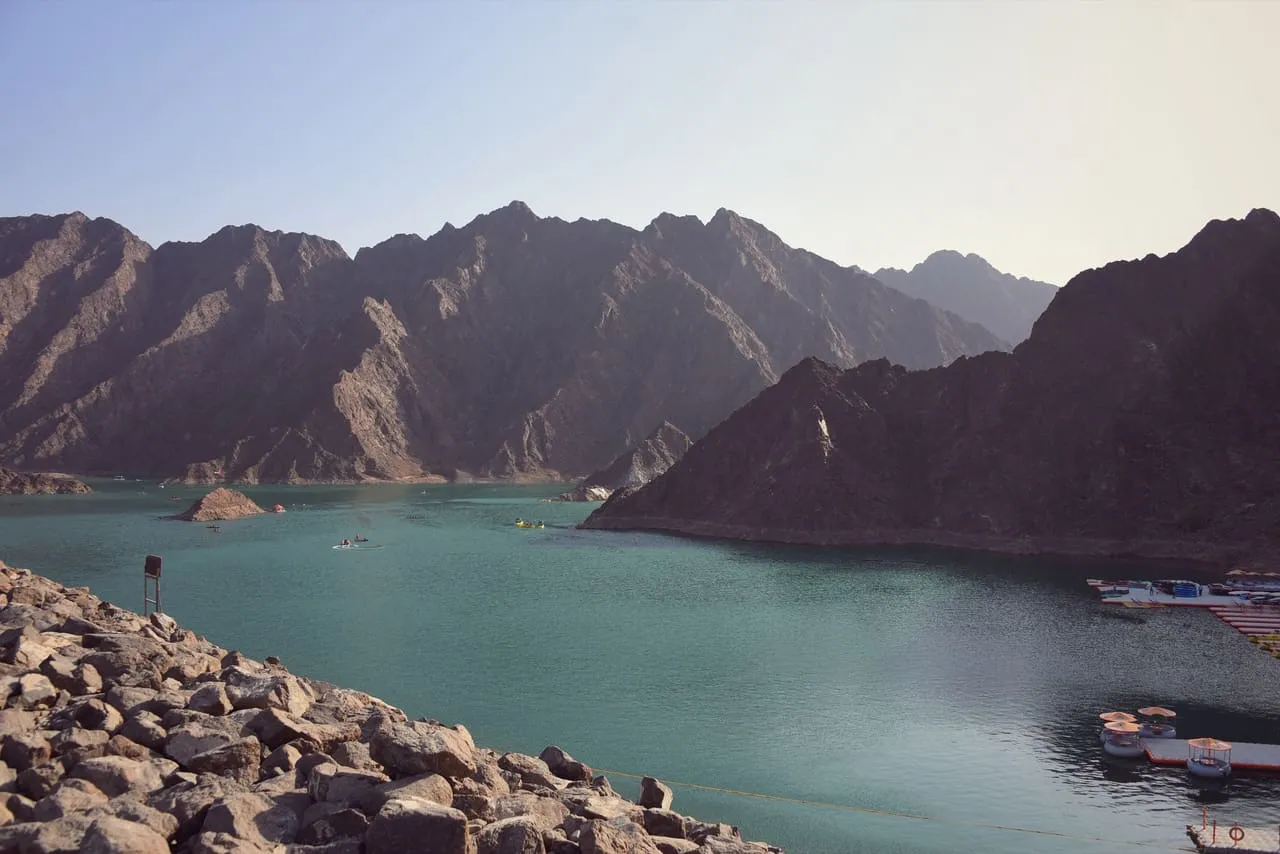
Bare mountains of the Musandam Peninsula rising straight out of the sea in OmanRobert Haandrikman / Wikimedia Commons, CC BY 2.0
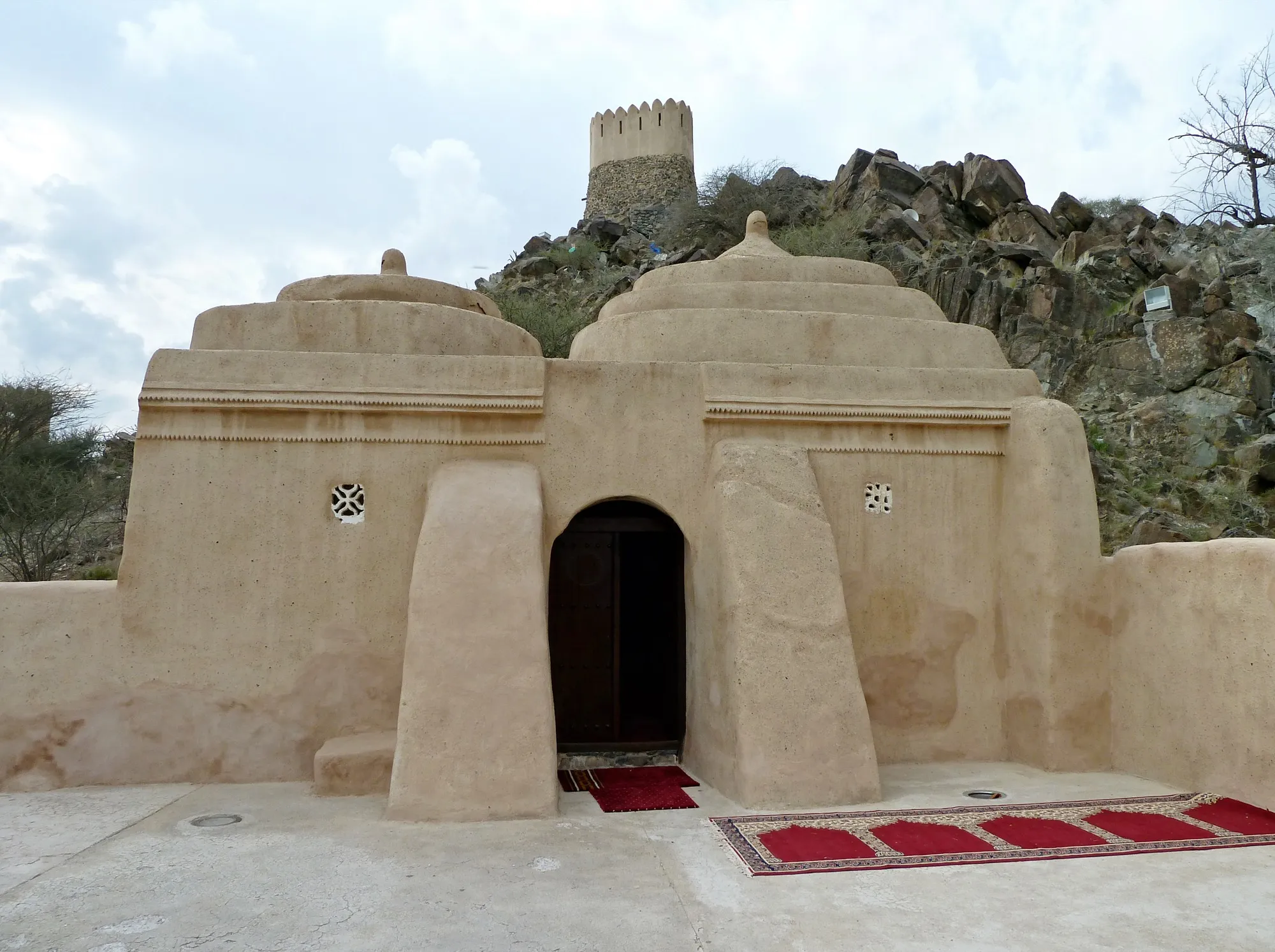
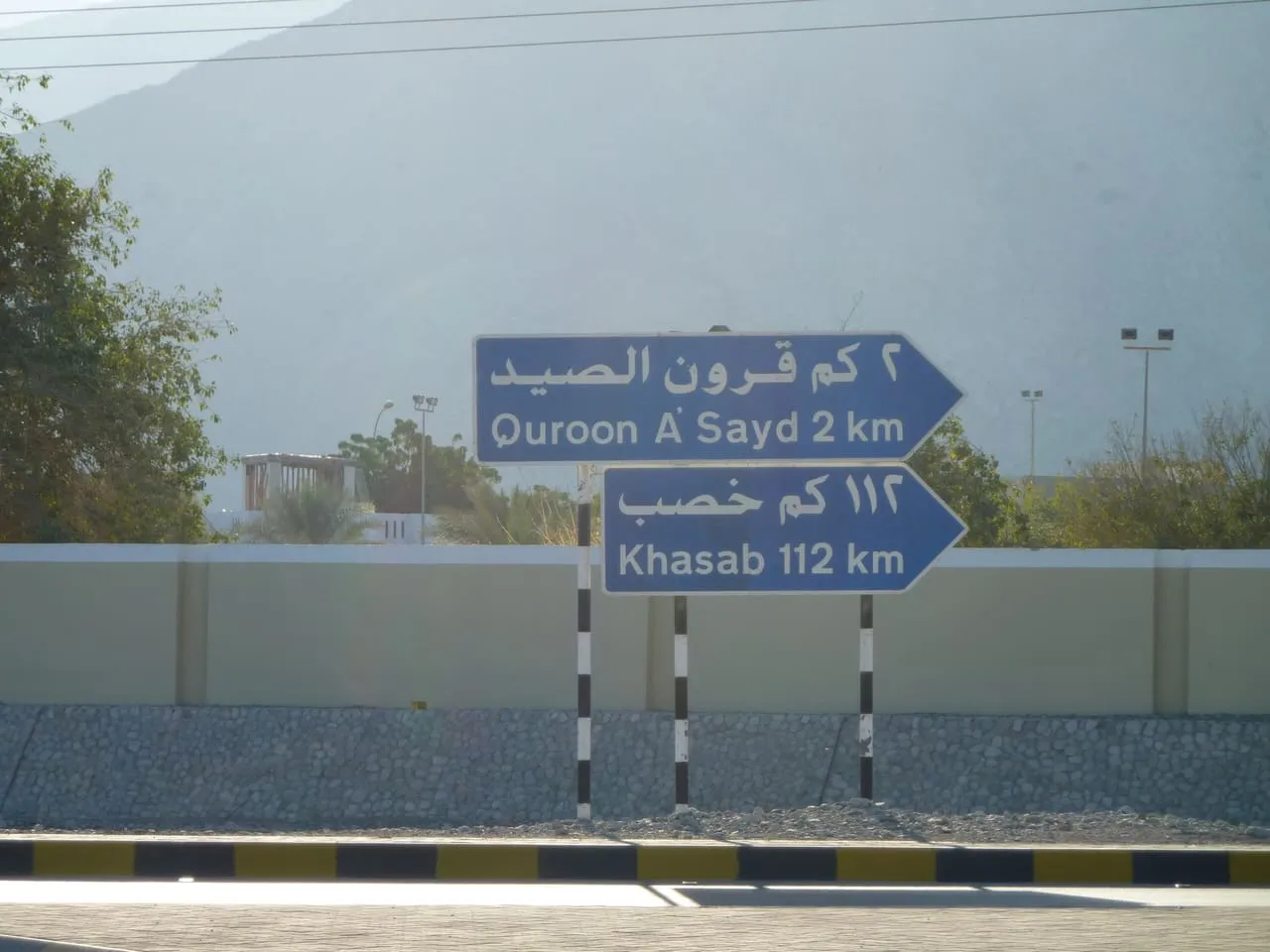
An Omani road sign in Dibba Al-Bayah pointing the way to KhasabToppazz / Wikimedia Commons, CC BY 3.0
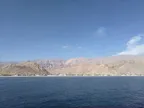
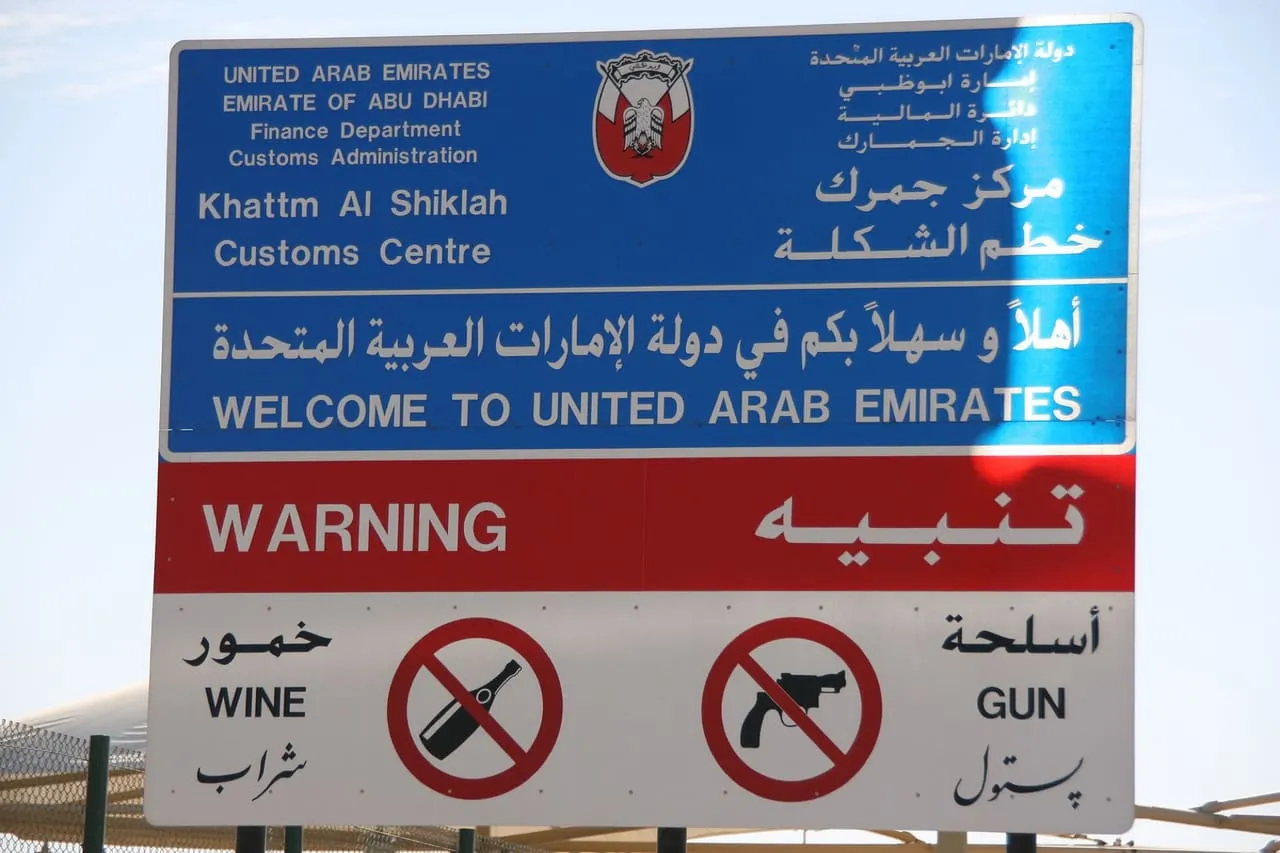
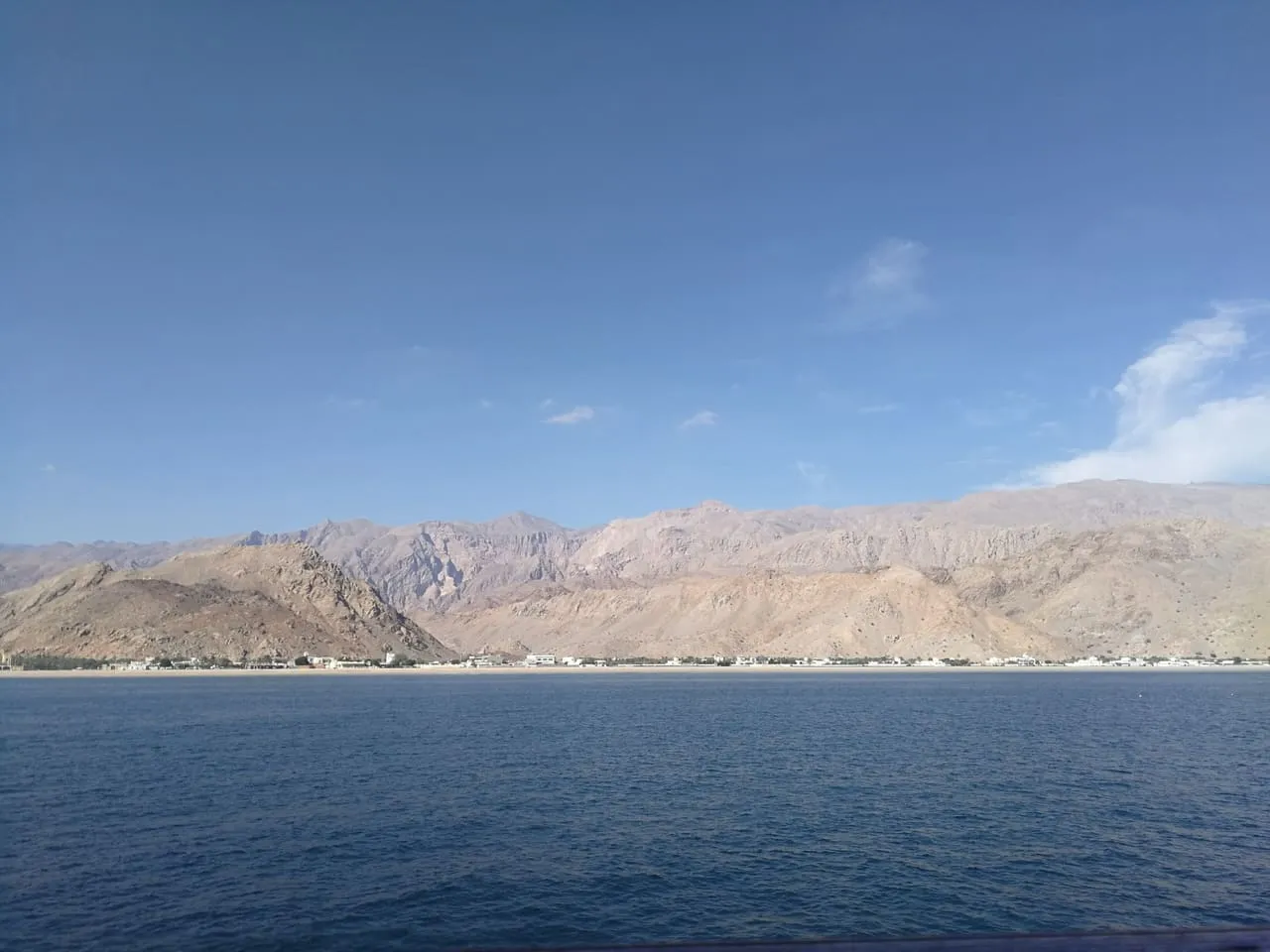
The coastline and mountains of Dibba Al-Bayah, the Omani side of Dibba, seen from the seaNintentoad125 / Wikimedia Commons, CC BY-SA 4.0

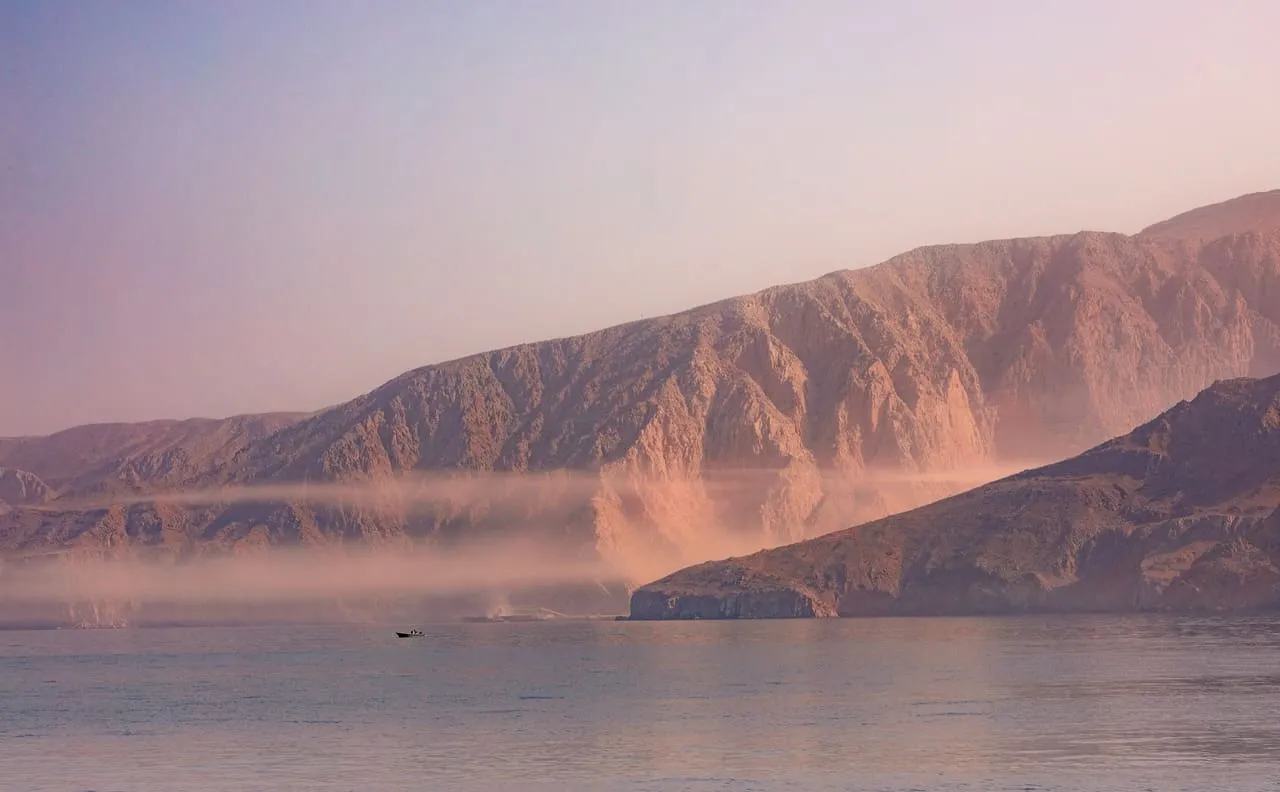
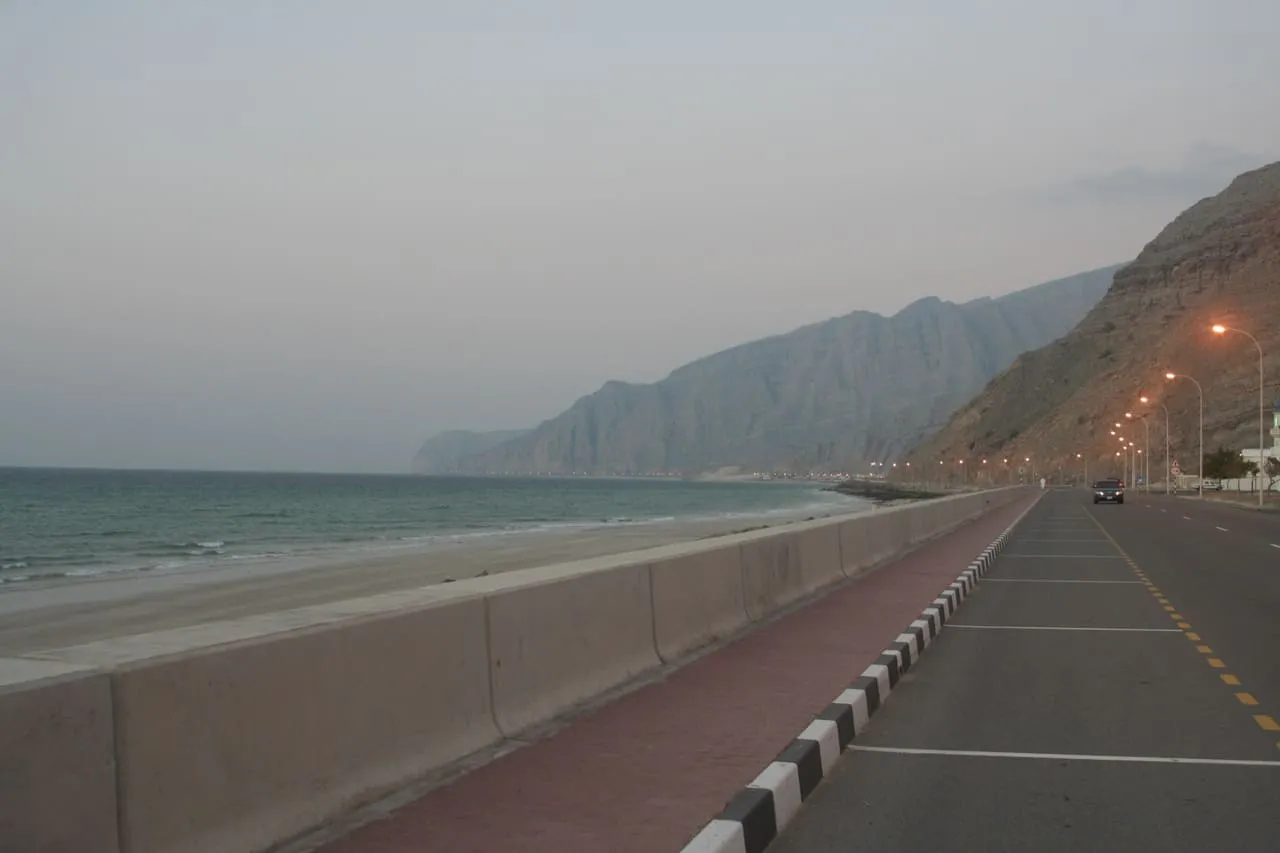
The Corniche road along the sea in Khasab, Musandam, under steep mountainsRyan Lackey / Wikimedia Commons, CC BY 2.0