
By Mohammed Rashad Hussain, Managing PartnerPublished 12 min read
Tourist visa or visit visa: what is the difference?
The sponsor is the difference. A tourist visa is sponsored by a business in the travel trade. The UAE Government portal names licensed travel agents and hotels in the UAE, plus airlines, which set their own conditions, such as flying with them.
Dubai adds a rule of its own. GDRFA Dubai says only accredited tourism offices in the emirate can issue its single-entry tourist visa. The paperwork is light: one personal photo and a passport copy. Nationals of Iraq, Pakistan, Iran and Afghanistan also add their home national identity card.
A visit visa for a relative or friend is sponsored by a person living in the UAE, either a citizen or a foreign resident. ICP expects that host to hold an active sponsor file and earn a minimum monthly salary.
- AED 4,000 to host a first-degree relative.
- AED 8,000 for second and third-degree relatives.
- AED 15,000 to host a friend.
The family route asks for more documents. GDRFA lists a marriage contract or birth certificate as proof of kinship, plus the host’s salary certificate or work contract.
Do you need a visa before you fly to the UAE?
Your passport decides, not the city you fly from. The UAE Government portal puts visitors into three groups:
- GCC citizens need no visa at all.
- Some nationalities get a visa on arrival. The portal warns that the eligible list changes from time to time, so check it in the week you travel.
- Every other nationality applies before travel, through a sponsor in the UAE.
One rule applies to every passport: it must be valid for at least 6 months from your date of entry.
Indian nationals have a route of their own. Those holding a US visa or green card, or a UK or EU residence visa, can use a visa on arrival. GDRFA Dubai lists an extension for it of 14 days from approval.
A quick way to find your visa
Start from your passport and your reason for coming, then follow the first line that fits:
- You hold a GCC passport. No visa is needed.
- Your nationality is on the visa-on-arrival list. You need no advance visa, but recheck the list a few days before you fly.
- You live in another GCC country. Apply online for the GCC resident eVisa before you travel.
- You are changing planes and want to leave the airport. Ask your UAE airline for a 48 or 96-hour transit visa.
- A relative or friend in the UAE will host you. Your host applies for a relative or friend visit visa of 30, 60 or 90 days.
- You expect several trips a year. Look at the 5-year multiple-entry tourist visa.
- You are coming on holiday with a hotel or tour booked. A tourism business sponsors a 30 or 60-day tourist visa.
Residents of the other five GCC countries get their own section below. If you have not booked yet, our guide to the seven UAE airports shows which airlines land where.
Which visit visas can you get: 30 days, 60 days, multiple entry or 5 years?
These are the visas most short visits use. Each line comes from the GDRFA Dubai, ICP or UAE Government service page listed under the sources.
| Visa | Who sponsors or applies | Stay | Extension limit |
|---|---|---|---|
| Tourist visa, single or multiple entry | A hotel, airline or travel agent; in Dubai, an accredited tourism office | 30 or 60 days | Up to 120 days in total (GDRFA) |
| Visit visa for a relative or friend, single or multiple entry | A UAE citizen or foreign resident | 30, 60 or 90 days | Up to 180 days in total (GDRFA) |
| 5-year multiple-entry tourist visa | You apply; no host needed in the UAE | Up to 90 days per visit | A further 90 days, and 180 days a year at most (ICP) |
| Transit visa | A UAE-based airline | 48 or 96 hours | Cannot be extended |
| GCC resident eVisa | You apply online before travel | 30 days from entry | Once, by 30 days |
The 90-day option catches people out. In the GDRFA catalogue, Dubai’s tourist visas come in 30 or 60 days only. The 90-day stay sits with the relative and friend visas. ICP describes its visit visa as 30, 60 or 90 days, depending on the duration you select.
The 5-year visa suits people who fly in several times a year. The UAE Government portal asks for a bank balance of USD 4,000, or the same in another currency, over the last 6 months. You also need UAE health insurance valid for 180 days and an onward or return ticket. GDRFA Dubai holds an AED 3,000 guarantee inside its listed total of AED 3,713.
When do transit, GCC resident and family visit visas apply?
Transit visa
A transit visa is for leaving the airport on a stopover. UAE-based airlines sponsor it, and the UAE Government portal says a travel agency or an airport hotel can also apply for you. You choose 48 or 96 hours.
Three limits apply. It is single entry, it cannot be extended, and it must be approved before you enter the UAE. It is meant for travellers who do not qualify for visa-free entry or a visa on arrival. With 96 hours on the clock, our Dubai travel guide helps you split the time between the city and a day out.
GCC resident eVisa
If you live in Saudi Arabia, Qatar, Kuwait, Bahrain or Oman, you apply online before you travel, and so do the companions travelling with you. The permit is valid for 30 days from issue. Once you land, you may stay 30 days from entry, extendable once by 30 days.
Two conditions decide eligibility. Your GCC residency must be valid for at least 1 year from your arrival date, and your profession must be on the approved list. GDRFA Dubai and ICP both run the service.
Visit visa for family and friends
Use this one when someone in the UAE hosts you. In Dubai, GDRFA asks for proof of the relationship and the reason for the visit. A single-entry visa also needs two personal photos and an AED 1,000 financial security deposit. ICP, which covers the other six emirates, lists guarantees of AED 1,000 for single entry and AED 2,000 for multiple entry.
How long does a UAE visa take to process?
GDRFA Dubai gives an expected completion time of 48 hours for its tourist visas. The same 48 hours applies to relative and friend visas, the 5-year visa and extensions. ICP gives 2 days for its visit visa service.
Treat those as the authorities’ targets, not a promise to you. Leave a margin of several days before you pay for flights that cannot be changed.
The issue date matters as much as the processing time. ICP says the holder must enter the UAE within the 60-day validity of the entry permit, counted from its issue date. The 30, 60 or 90 days of the stay then run from the day you arrive.
What does a UAE visa cost? Government fees and service fees, shown separately
Government fees are published on each service card. These are GDRFA Dubai’s amounts before 5% VAT, as listed on 17 October 2026.
| Dubai visa (GDRFA) | 30 days | 60 days | 90 days |
|---|---|---|---|
| Tourist visa, single entry | AED 200 | AED 300 | Not listed |
| Tourist visa, multiple entry | AED 300 | AED 500 | Not listed |
| Relative or friend, single entry | AED 200 | AED 300 | AED 400 |
| Relative or friend, multiple entry | AED 300 | AED 500 | AED 700 |
Being inside the UAE when the visa is issued costs more. GDRFA adds an in-country fee of AED 500, plus AED 10 each for the Knowledge Dirham and the Innovation Dirham. GDRFA also notes that the total can vary with the visitor’s circumstances.
ICP prices the same visas differently for the other six emirates. For a single-entry visit visa, its card lists AED 100 each for the application, the issuance and the smart service. Relative and friend visas add a guarantee.
Any agency fee comes on top of the government fee. Ask for it as a separate line, so you can hold the government part up against the GDRFA or ICP service card. Assure quotes its own fee that way, on WhatsApp, and never folds it into the government amount.
Need more time? Extensions and overstay fines
Extend before the visa runs out. GDRFA Dubai extends a tourist visa one or more times, up to 120 days in total. Each extension costs AED 600 plus 5% VAT, and the AED 520 in-country fees apply because you are already in the UAE. Only accredited tourism offices in Dubai can file it.
A relative or friend visa stretches further. GDRFA allows extensions up to 180 days in total, at the same AED 600 plus VAT. ICP, for the other emirates, caps the total stay with extensions at 120 days.
Overstaying is expensive. ICP’s visit visa card lists the fine at AED 50 a day. For the 5-year visa, GDRFA says fines are collected at the departure port and the guarantee is forfeited. The UAE Government portal points to a fines inquiry service if you are unsure of your position.
Living in the UAE and travelling abroad: visa-free, e-visa or embassy visa?
Your passport sets the rules first, and UAE residence sometimes adds a shortcut. Five common trips show the range:
- Oman. GCC citizens need no visa. More than 100 nationalities may stay up to 14 days without one, with a return ticket, a hotel booking, health insurance and enough money for the stay. A second group of 24 nationalities, including India, Egypt, Morocco and Vietnam, qualifies with extra conditions. One of them is residence in a GCC country in a profession that qualifies for a residence visa. The 14 days cannot be extended. Everyone else uses the Royal Oman Police eVisa.
- Saudi Arabia. Under the tourist visa regulation, holders of a GCC residence visa with at least 3 months left can apply like eligible nationalities. Their profession must be on the visitsaudi.com list. First-degree relatives travelling with them are covered. A multiple-entry visa lasts 1 year, with stays of up to 3 months, and the regulation sets the fee at SAR 300.
- Qatar. GCC nationals enter visa-free. Residents of GCC countries apply on the Hayya platform for the GCC Resident Visa, coded A2.
- Bahrain. The NPRA eVisa portal sets out the conditions, validity and stay for each visa type on its eligibility page.
- Schengen countries. Apply at the consulate of the country where you will spend longest, between 6 months and 15 days before travel. The standard fee is EUR 90 for adults and EUR 45 for children aged 6 to 12. A decision normally takes 15 days. The visa covers stays of up to 90 days in any 180-day period.
The UK works by nationality too. GOV.UK says most visitors need either a visa or an electronic travel authorisation (ETA), which costs GBP 20 and covers visits of up to 6 months.
Driving to Oman or Saudi Arabia: which visa you need at the border
At a land border, each passenger needs their own visa or exemption. A chauffeur-driven car does not change that.
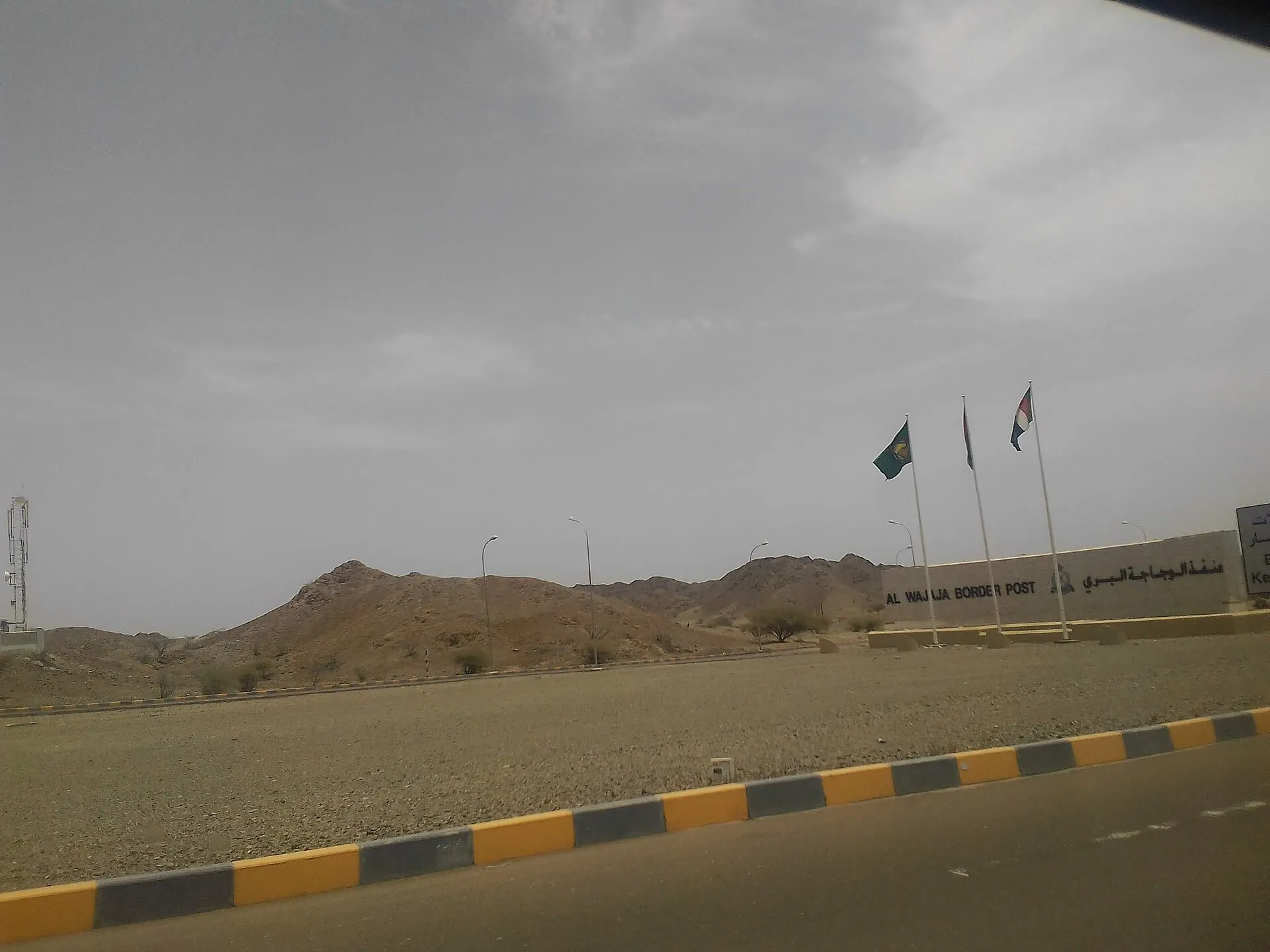
From Dubai, the road into Oman leaves the UAE at Hatta and enters Oman at Al Wajajah. The German Embassy in Abu Dhabi noted in March 2026 that these crossings take vehicles only, not people on foot. It also advised applying for the Royal Oman Police eVisa before reaching the border. Our step-by-step for the Hatta crossing covers the exit and entry posts. The guide to which UAE and Oman crossings are open to you compares Hatta, Mezyad and Khatmat Malaha.
Musandam is Omani territory too, reached through Dibba or north of Ras Al Khaimah. Read the Dibba and Khasab entry rules before you book a dhow day there.
Road trips to Saudi Arabia cross at Al Ghuwaifat on the UAE side and Al Batha on the Saudi side. The same embassy notice said a Saudi eVisa needs a destination address, such as a hotel, and that border officers check hotel bookings. Qatar’s only land border is with Saudi Arabia, and Bahrain is reached over the King Fahd Causeway from Saudi Arabia. A road trip to either needs a Saudi visa as well.
Assure drives into Oman and Saudi Arabia on request, confirmed per trip. The Dubai to Oman route page gives distances to Muscat, Sohar and Khasab. The UAE to Saudi Arabia page covers Al Batha and the drive to Riyadh. For every corridor out of Dubai, start with road travel from Dubai.
How to check an application on the official ICP and GDRFA services
Check status only on the government channels. The UAE Government portal splits them by emirate:
- A visa issued in Dubai: the GDRFA Dubai status inquiry. Call 800 5111 inside the UAE or +971 4 313 9999 from abroad.
- A visa issued in Abu Dhabi, Sharjah, Ajman, Umm Al Quwain, Ras Al Khaimah or Fujairah: ICP smart services. ICP’s toll-free number is 600522222.
Applications go through the same bodies. The UAE Government portal lists the ICP eChannels portal, the UAEICP app, the GDRFA website and typing centres registered with ICP or GDRFA.
Assure is a private company, not a government website. Before you type passport details into any site, check that its address ends in u.ae, icp.gov.ae or gdrfad.gov.ae. The UAE Government portal publishes tips against visa fraud as well.
How Assure handles visa applications, and what no agency can promise
A visa enquiry starts with four details on WhatsApp: your nationality, where you live now, whether you are inside the UAE today, and your travel dates. The third one matters because it decides the AED 520 in-country fees. The reply names the visa that fits, the official fee from its service card and the documents to prepare.
Ask every agency who files your visa, Assure included. For a Dubai tourist visa, GDRFA allows only accredited tourism offices in the emirate to issue it. A straight answer names the office.
No agency can promise approval. GDRFA, ICP or the destination’s embassy makes the decision. A complete file avoids the avoidable refusals, and that is the honest limit of what any agent adds.
The visa is often half the trip. Once it is issued, send the flight number, and a chauffeur meets the guest in the arrivals hall after passport control and customs, holding a board with their name. Our DXB airport pickup page covers all three terminals. Visitors who later need to renew a visa at the airport will find the Immigration Centre in the Terminal 3 arrivals area. The Terminal 3 arrivals walk-through shows the route from the aircraft to the car.
To start, send your details through our contact page or the WhatsApp button. Every rule on this page was checked against its official source on 17 October 2026, and visa rules change often, so confirm yours on the official page before you travel.
Photos in this guide

Signs for Arrivals, Baggage Reclaim and Connections above the queue lanes in Concourse B at Dubai International AirportProtoplasmaKid / Wikimedia Commons, CC BY-SA 4.0

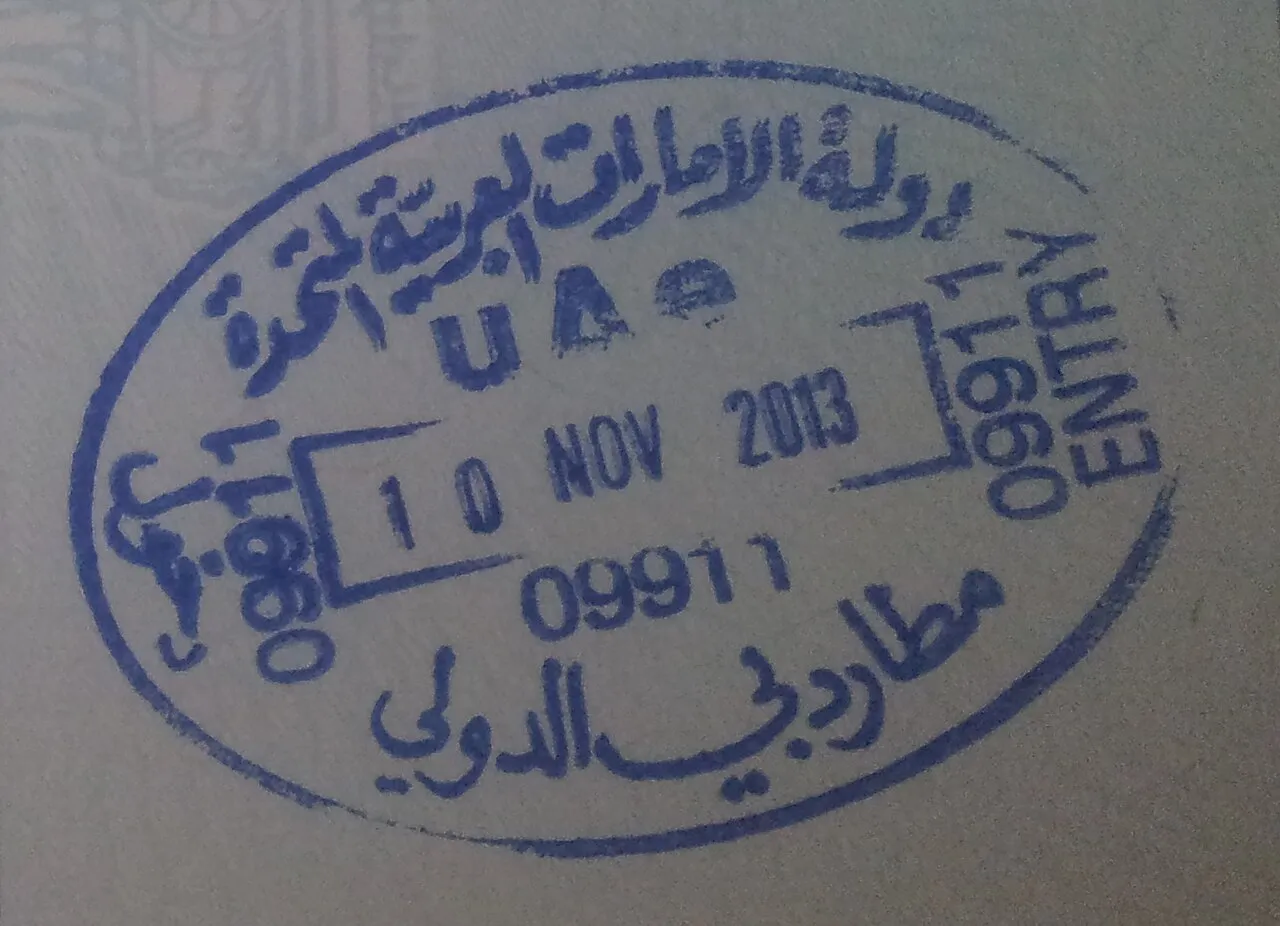
A UAE entry stamp from Dubai International Airport in a passport, dated 10 November 2013Baldie / Wikimedia Commons, CC BY-SA 3.0
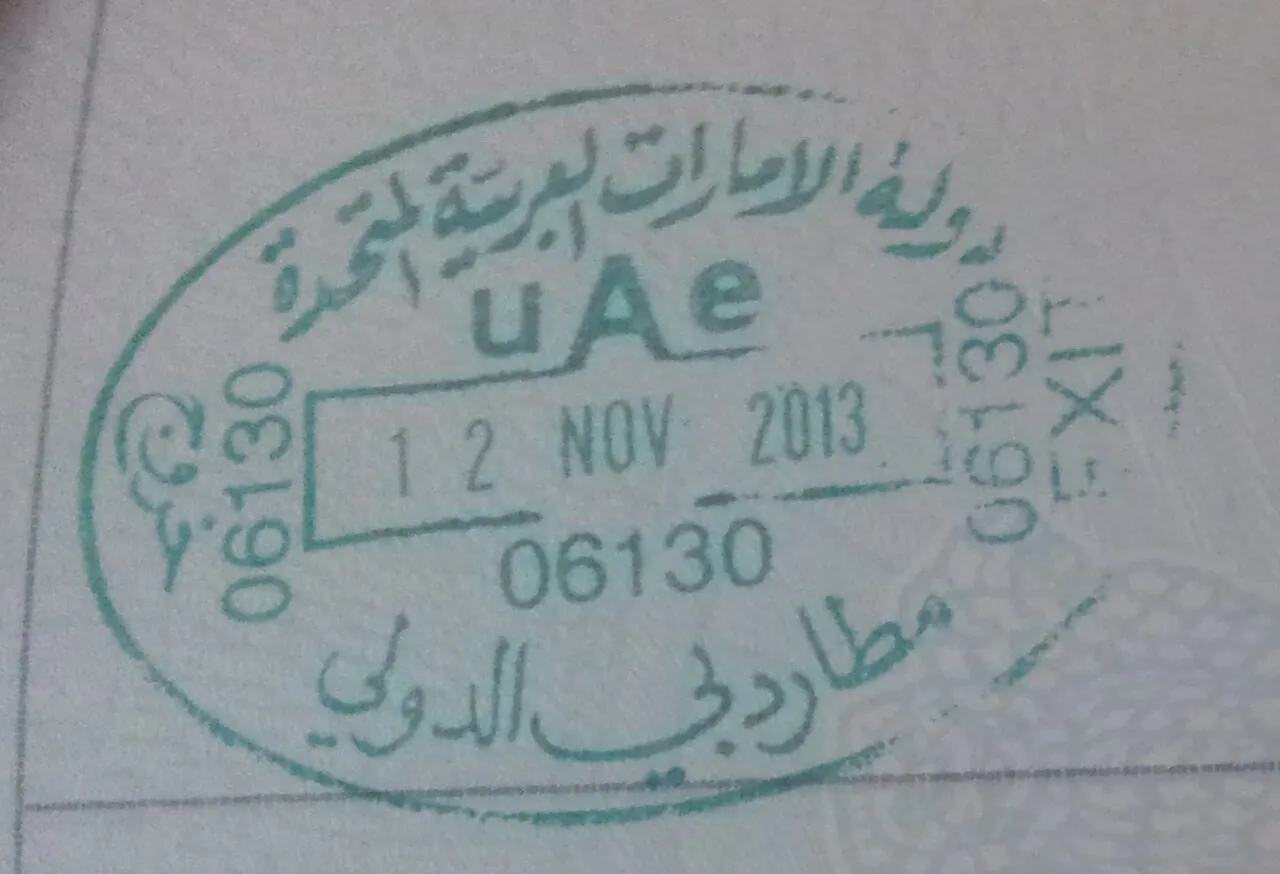
A UAE exit stamp from Dubai International Airport in a passport, dated 12 November 2013Baldie / Wikimedia Commons, CC BY-SA 3.0

Flags flying over the Al Wajajah land border post in Oman, with rocky hills behindSri Namagiri Mahalakshmi Baskaran / Wikimedia Commons, CC BY 3.0