By Mohammed Rashad Hussain, Managing PartnerPublished 6 min read
A team trip is a fixed fixture surrounded by moving parts. Players have to arrive rested, kit has to arrive with them, and nobody wants a late coach on match day. This guide covers how to size the vehicles, where UAE teams play and train, and how to time the day.
What do you need to move a team?
Moving a team takes two kinds of vehicle: a coach for people and a van or truck for kit. A coach hold is for personal luggage. Match kit, medical cases and training equipment need their own space.
List the parties first:
- Playing squad: every player travelling, including reserves.
- Technical staff: coaches, analysts, goalkeeping and fitness staff.
- Medical and support: doctors, physios, kit managers and team managers.
- Officials and guests: federation staff, sponsors and media officers.
Count the cases next. A squad of 25 players with 13 staff is 38 people, and 38 passengers with a case each plus kit bags does not fit a small coach. The next section turns those numbers into vehicles.
Which coach and kit van suit which squad?
Match the vehicle to people first, then check the hold. The coaches below come through our partner network, subject to availability. The vans and cars come from Assure’s fleet data.
| Party | Vehicle | Seats | Large bags in the hold |
|---|---|---|---|
| Up to 12 | Toyota Hiace | 12 | about 3 |
| Up to 13 | Mercedes-Benz Sprinter, 13 seats | 13 | about 6 |
| Up to 19 | Mercedes-Benz Sprinter, 19 seats | 19 | about 3 |
| Up to 22 | Toyota Coaster | 22 | none in a hold |
| Up to 35 | 35-seat coach | 35 | about 15 |
| Up to 50 | 50-seat coach | 50 | about 35 |
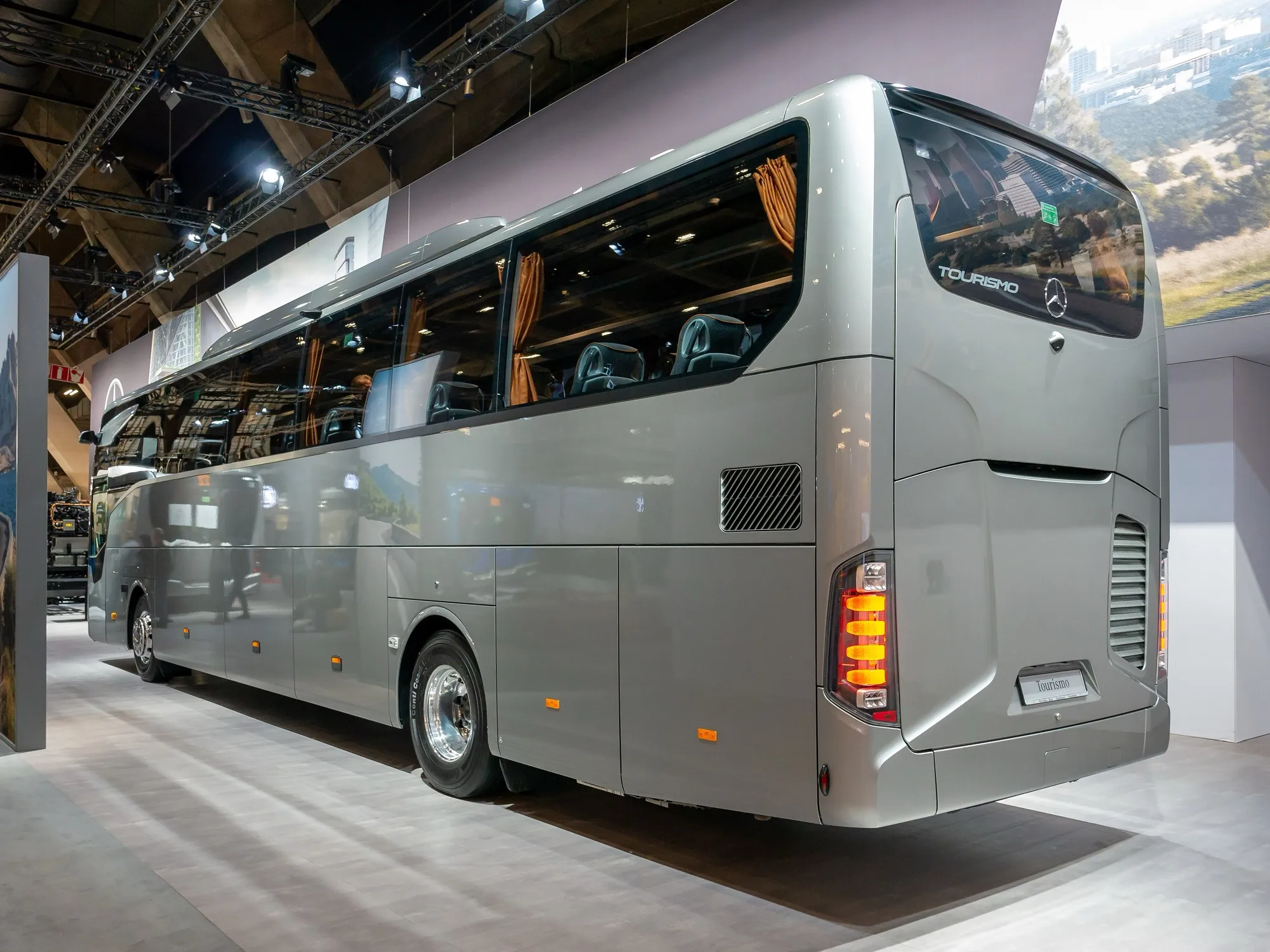
The 35-seat coach carries 35 people but about 15 large cases, so a party of 35 with a bag each needs a second vehicle for luggage. A 50-seat coach is the natural choice for a full squad plus staff, with the hold taking personal bags. Our guide to what size bus you need explains the figures, and the bus with driver page lists the larger options.
For kit, a 13-seat Sprinter is a practical van for medical cases, balls, bags and a laundry run. Heavy loads, such as goal frames, goalkeeping rigs or cricket nets, go on a truck. Send the transport desk a packing list with case counts and weights. The vehicles for a group event guide shows how to split a party across vehicles.
Where do teams play and train in the UAE?
Three places carry most fixtures that bring visiting teams. Capacities come from the venues’ own pages or Wikipedia where noted.
| Venue | Location | Sport and capacity |
|---|---|---|
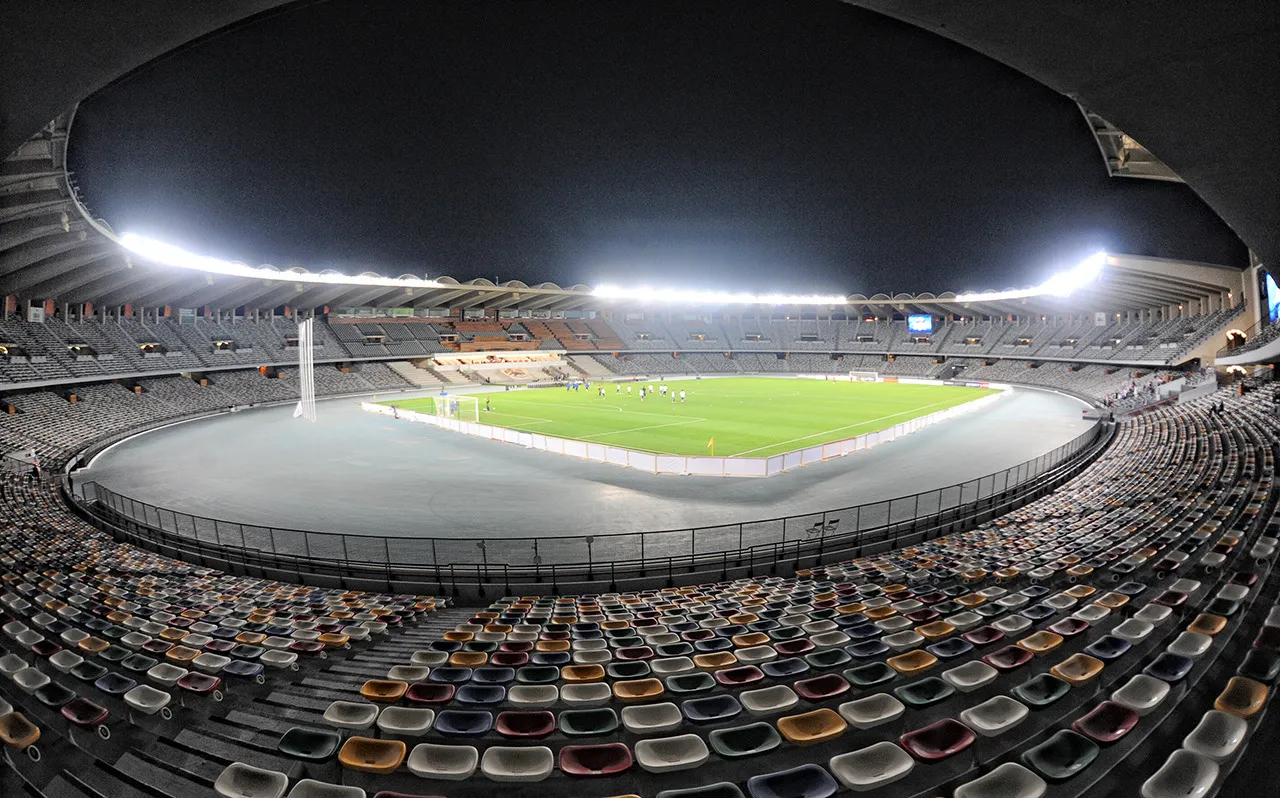
| Zayed Sports City Stadium | Abu Dhabi | Football and concerts, 40,000 seated, per the venue |
| Dubai International Stadium | Dubai Sports City | Cricket, 25,000 seats, per Wikipedia |
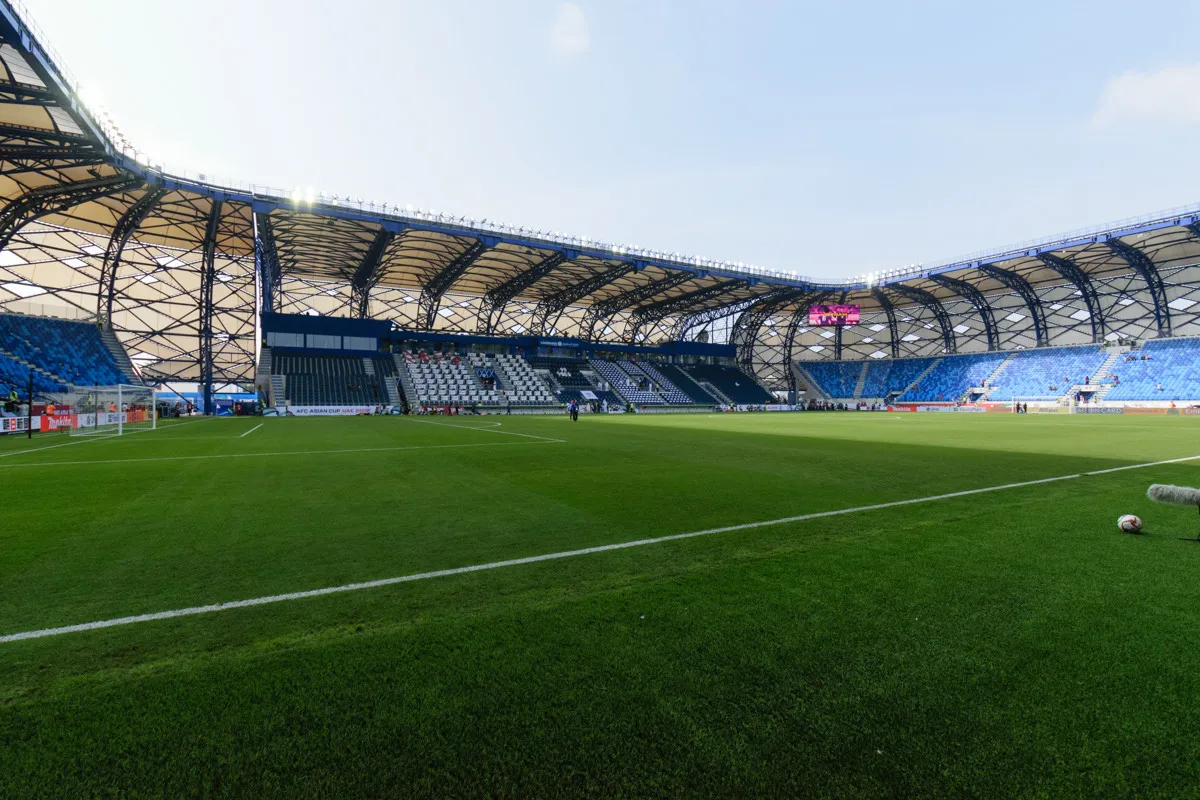
| Al Maktoum Stadium | Oud Metha, Dubai | Football, about 15,000, per Wikipedia |
Zayed Sports City says its stadium has hosted several FIFA Club World Cup editions and the 2019 AFC Asian Cup. Dubai Sports City also has Rugby Park, which seats 5,000, and the ICC Academy, which has two full-sized grounds plus indoor and outdoor training facilities. Al Maktoum Stadium is the home ground of Al Nasr SC and United FC, and a redeveloped stadium opened in December 2018.
Al Ain has Hazza bin Zayed Stadium, which we include for the drive time. We did not verify its capacity or how teams use it.
For the cricket ground, our Dubai International Cricket Stadium guide covers parking, buses and match-night traffic. Team coach drop-off points are set by each venue, and none is published, so ask the home club or the organiser.
How far is it between the emirates?
Distances come from OSRM road data, timed for an empty road on 25 October 2026. A loaded coach drives slower than a car, so add at least 20 to 30 minutes on a long leg.
| Route | Road distance | Without traffic |
|---|---|---|
| Dubai International Airport (DXB) to Zayed Sports City Stadium | about 146 km | about 99 minutes |
| Downtown Dubai to Zayed Sports City Stadium | about 133 km | about 87 minutes |
| Coca-Cola Arena, Dubai to Zayed Sports City Stadium | about 131 km | about 85 minutes |
| Zayed International Airport (AUH) to Zayed Sports City Stadium | about 29 km | about 28 minutes |
| Zayed Sports City Stadium to Etihad Arena, Yas Bay | about 27 km | about 27 minutes |
| DXB to Dubai Sports City | about 39 km | about 33 minutes |
| Downtown Dubai to Dubai Sports City | about 26 km | about 25 minutes |
| Downtown Dubai to Hazza bin Zayed Stadium, Al Ain | about 129 km | about 87 minutes |
The Dubai to Abu Dhabi road is the E11. Our Dubai to Abu Dhabi transfer page covers that route, and the rush hour guide shows when it slows.
How do you time match day?
Start from the time the team must be at the stadium, and subtract everything between the hotel and the dressing room. The pattern below is a planning example, not a competition rule. Use the times your home club or tournament gives you.
- Team in the dressing room: set by the competition or the home club.
- Security and entry at the stadium: allow time for accreditation checks.
- Coach drop-off to the team entrance: confirm the point with the venue.
- Drive from the hotel: use the table above, plus a margin for a coach.
- Pre-match meal and team talk at the hotel: this sets the coach’s departure.
- Spare vehicle on standby: one car or van in case a player or official is late.
For a 130 km drive from Dubai to Zayed Sports City, many teams stay in Abu Dhabi the night before. That removes the road risk and keeps the pre-match routine at the hotel. A team playing in Dubai Sports City from a Dubai hotel faces a 30 to 40 minute drive, which fits a normal routine.
How should the team arrive and leave?
Arrival is the first test of the plan. Meet the squad at the airport with the coach and the kit van together, so players board while staff clear the bags. Agree the order of the airport run with the team manager: hold luggage tags, a bag list and one person who signs for the kit.
On departure day, send the kit van first. Kit is slow to load and the team cannot leave without it. The coach follows once the van is gone and the head count is complete.
What about training camps and rest days?
A training camp is a loop, not a one-way trip. The coach runs from the hotel to the training ground, and back, at a fixed time each day. Pitch bookings, gym sessions, recovery pools and physio visits change the pattern.
Plan a base vehicle for the camp: a 13 or 19-seat Sprinter for staff runs, plus a coach for training sessions. Set the pickup times with the head coach’s schedule and repeat them each day, so the driver learns the route. A rest day needs a smaller vehicle for shopping, dining and treatment trips.
Teams that travel to the UAE every season can book through an account. The production and talent transport page describes how Assure handles team, film and concert work, and corporate accounts cover the contract side. For artists and crews on show days, see the guide to concert and artist transport. The Etihad Arena guide covers Yas Island on event nights.
Photos in this guide
Zayed Sports City Stadium in Abu Dhabi with its curved grandstands and floodlight mastsВалерий Дед / Wikimedia Commons, CC BY 3.0

The pitch and the curved blue-seated stands of Al Maktoum Stadium in Dubai, under a translucent roofEl Loko Foto / Wikimedia Commons, CC BY 4.0
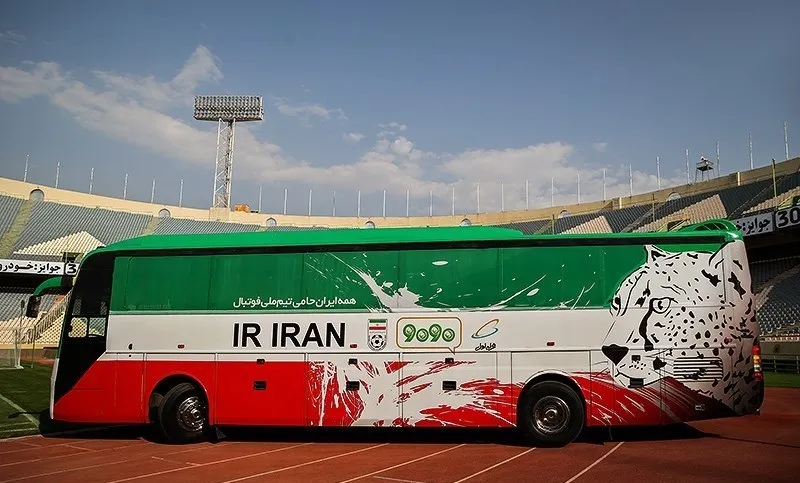
A green, white and red national football team coach parked on the track beside a stadium pitchHamed Malekpour / Wikimedia Commons, CC BY 4.0